Market View
J200 107,759.00 +0.19% J203 115,165.00 +0.15% J210 135,167.00 +0.17% J211 119,730.00 -0.22% J212 25,787.00 +0.56% J213 136,745.00 +0.23%
Winning Shares (Top 5)
Code Name Added Price Latest % Gain % Gain/Year
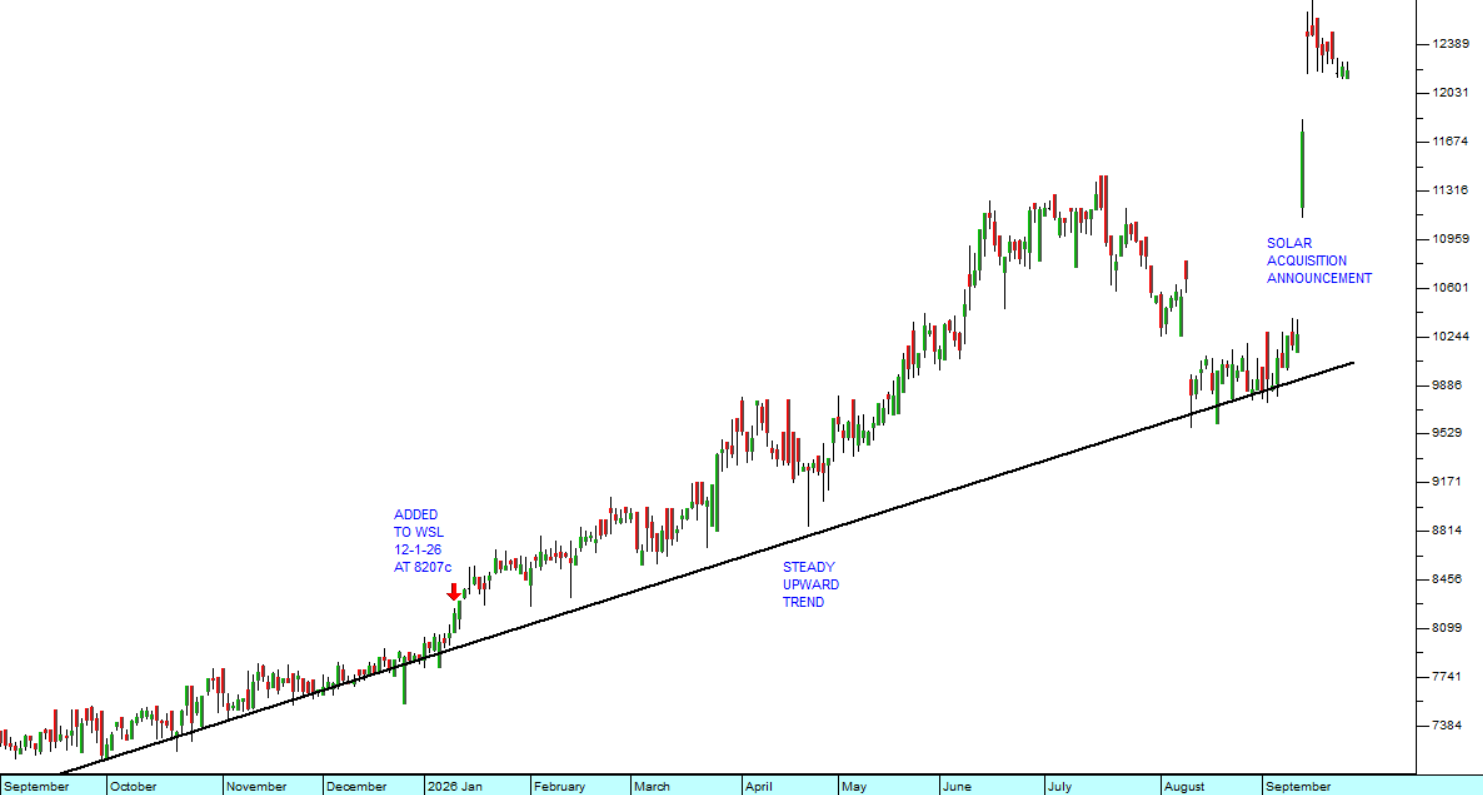
ADH ADVTECH 2023-08-14 1975 4881 +147.14% +47.78%
GRT GROWPNT 2025-05-31 1349 1600 +18.61% +14.51%
NY1 NINETY-1L 2025-05-28 3790 4324 +14.09% +10.92%
MKR MNTKRENEW 2026-09-03 3230 4071 +26.04% +1,187.95%
CLH CITYLDG 2025-11-07 436 440 +0.92% +1.09%
Opinions (Top 5)
Code Name Date Action
CAT CAXTON 2026-09-13 View

11-09-2026   Caxton (CAT) is a South African printer and publisher. This company is at the heart of the displacement of hard copy by digital and it is adjusting by reducing costs and trying to move across to digital platforMs. But there has been a steady erosion of advertising revenue and even before COVID-19, the purchase of magazines has been in decline.

In its results for the year to 30th June 2026 the company reported revenue down 1,8% and headline earnings per share (HEPS) down 5,7%. The company said, "Group revenues declined marginally by R121.3 million (1.8%). This decline was felt mainly in our local newspaper publishing and printing operations and partly offset by some growth in the packaging and stationery segment". The share broke up out of an island formation in 2021 and was in an upward trend until February 2026.

Since then it has been falling. Print media is giving way to digital media and the transition has been very difficult to manage, but management has shown their resilience and the share has not collapsed. A break below the cycle low at 1100c would be a problem, but the recent results have boosted the share price.   

REM REMGRO 2026-09-13 View

11-09-2026   Johann Rupert's Remgro (REM) is an investment holding company which owns 28,2% of Rand Merchant Bank Holdings (RMH) and 3,9% of Firstrand. But that is not Remgro's only investment. It also owns Mediclinic, an international healthcare company with divisions in Switzerland, Southern Africa and United Arab Emirates which has now been delisted from the JSE.

Remgro recently sold its 25,8% stake in the London-listed Unilever Group for R4,9bn in cash plus the Unilever spreads business in Southern Africa. This gave it ownership of brands like Flora and Rama and other spreads. In its foods division it also owns 31,8% of Distell and 77,2% of RCL Foods (where the Unilever spreads division may be housed in a new subsidiary called "Silver 2017").

Under insurance, Remgro owns 29,9% of RMI. It owns a number of other investments including a 23,1% stake in Grindrod and a 30% stake in Seacom. The Competition Tribunal has approved the acquisition by Community Investment Ventures Holdings (CIVH), a Remgro subsidiary, of Vumatel.

Vumatel is a "last mile" fibre infrastructure company. In terms of the approval, Vumatel must supply free uncapped fibre services to schools near where it's networks pass for the next 10 years. On 2nd December 2020 Remgro announced that it is planning to increase its stake in RCL Foods at a cost of R805m.

The company has the intention of getting into the electricity generation business to supply its own businesses because it believes that Eskom can no longer be relied upon. In its results for the six months to 31st December 2025 the company reported headline earnings per share (HEPS) up 38,5% and net asset value (NAV) up 1,6% to 29703c per share.

The company said, "The Group is directly exposed to the Middle East through Mediclinic Holdings Limited's (Mediclinic) market-leading healthcare operations in the United Arab Emirates, the prospects of which are closely linked to the ongoing stability and prosperity of the region. More broadly the impact of the conflict introduces risks to global asset prices".

In a trading statement for the year to 30th June 2026 the company estimated that HEPS would increase by between 37% and 47%. The company said, "The increase in headline earnings is mainly driven by stronger operational performances across Remgro’s key investee companies, as well as material once-off items at certain investee companies". While the Iran war has had a negative impact on the share price, this is a very high-quality blue chip which should be accumulated on weakness.

Technically, the share made a low at 8388c on 7th September 2020 and has been in a rising trend since. It is currently trading at 19868c (11-9-26) on a P:E of 11,99. We see further upside potential in the share.

PPR PUTPROP 2026-09-13 View

11-09-2026   Putprop (PPR) is a property company which was spun out of Putco (the bus company) and separately listed on the JSE in July 1988. The company owns 16 properties in industrial, retail and office with a gross lettable area (GLA) of 97601 square meters and a value of R1095m.

In its results for the six months to 31st December 2025 the company reported rental income of R72,3m down from the previous period's R74,8m. The company's headline earnings per share (HEPS) fell to 24,19c compared with 28,35c in the previous period. In a trading statement for the year to 30th June 2026 the company estimated that it would make a headline loss of between 60,97c and 73,15c compared with a profit of 60,86c in the previous period.

The company said, "This is principally due to revisions to the key assumptions and unobservable inputs used by the external valuers and approved by the Board in determining the fair value of the Group's investment properties". From a private investor's perspective, the main problem with this share is that it is relatively thinly traded with many days on which there are no trades at all. It is clearly not a share that the institutional investors are interested in.

We believe that there are better counters in the property sector.

TRL TRELLIDOR 2026-09-13 View

Trellidor (TRL) is a manufacturer of barrier security products, blinds and security shutters since 1976. The company is divided into the Trellidor business (security barriers) and the Taylor business (security and decorative blinds). Taylor also imports and distributes cornicing and skirting.

The company has 70 franchise outlets in South Africa and a very strong brand name. The company has representation in 24 countries, 17 of which are in Africa. Obviously, this company is linked to the construction and home improvements industry and so it is at the mercy of the state of the economy.

It is well managed and has a strong balance sheet. It should benefit directly from any improvement in the economy and has benefited from the work-from-home shift in the economy as well as the low level of interest rates. The company has been engaging in share buy-backs which support the current share price.

In its results for the year to 30th June 2026 the company reported revenue from continuing operations down 20,3% and a headline loss per share of 17,3c compared with a profit of 31,5c in the previous period. The company said that it would realise cost savings of R16,8m in the 2027 year.

Volumes traded in Trellidor shares have dropped off in recent months. This is not a good sign. At the same time the share price has been drifting sideways and downwards. Obviously, security still remains a priority for South Africans but the trend is not good.

LHC LIFEHC 2026-09-13 View

11-09-2026   Life Healthcare (LHC) is the second-largest, JSE main-board listed, healthcare company with private hospitals, same-day clinics and surgeries and healthcare companies in South Africa, the UK (Alliance Medical) and Western Europe. The out-going CEO, Shrey Viranna, says that the group is trying to diversify away from conventional hospitals more towards day-clinics and non-acute services.

It is also trying to diversify away from medical aid schemes towards people who pay for their medical attention out of their own pockets. They have launched MyLife Clinic which offers a consultation and basic medication for R300. In its results for the six months to 31st March 2026 the company reported revenue up 2,4% and headline earnings per share (HEPS) of 55,1c compared with a loss of 155,8c in the previous period.

The company said, "The Group is in a strong financial position as at 31 March 2026, with net debt to normalised EBITDA (as per bank covenant definitions) of 0.93 times". In a trading update for the 11 months to 31st August 2026 the company reported revenue growth of 1,7% and paid patient days (PPD) up by 0,8%.

The company said, "Normalised EBITDA(2) for the review period increased by c. 5.7%, reflecting progress against the Group’s multi-year cost-saving programme and ongoing operational efficiencies". Technically, the share peaked at 4700c in September 2014 and then entered a long downward trend.

It is now trading for around 1184c (11-9-26). It has not yet broken up through its long-term downward trendline. In our view, this share looks like reasonable value at current levels but investors should wait for the price to break up through the downward trendline before investigating further. 

Winning Share: NY1
Opinion: LHC
Muddy Waters  (2026-09-14)

It has become difficult to keep up with all the news coming out of America. Trump’s erratic behaviour is combining with other factors to make the systematic risk picture complicated and unpredictable. On the one hand, there have been some excellent results coming out of the S&P500 companies riding…

It has become difficult to keep up with all the news coming out of America. Trump’s erratic behaviour is combining with other factors to make the systematic risk picture complicated and unpredictable. On the one hand, there have been some excellent results coming out of the S&P500 companies riding the wave of AI.

AI Boom Lifts S&P 500 Earnings 32% as 86% of Companies Beat Estimates | Business | CryptoRank.io

Wall Street investors now expect that the earnings of the S&P500 companies will be roughly 32% higher than they were a year ago as second quarter earnings dramatically exceed analysts’ expectations. 86% of S&P500 companies have now reported earnings above forecast. Alphabet reported second-quarter earnings that included a $98 billion gain, while Amazon recorded $53.4 billion in non-operating pre-tax income, primarily related to its Anthropic investments. Nvidia’s revenue in the second quarter was $96,2bn – more than double the same quarter last year.  

On the negative side, the price of North Sea Brent oil spiked up to nearly $110 per barrel last week, but has now fallen back to just below $100. This decline to $100 comes because of new hopes for peace negotiations such as planned meetings between Gulf and Iranian foreign ministers. These hopes helped ease immediate fears of a total, prolonged blockage of the Strait of Hormuz. At the same time, oil producers in the Persian Gulf shifted shipments to alternative pipeline capacities and non-Middle Eastern regions (like the US, Canada, and Ghana) which increased output to bridge supply gaps. Finally, major international bodies, including the International Energy Agency indicated that there was slowing consumption and a broader economic slowdown, and notably reduced oil demand from major importers like China driven partly by the transition to electric vehicles.

In the middle of all this, on Tuesday and Wednesday this week the US Federal Reserve Bank’s monetary policy committee will be meeting to decide on the future course of interest rates, and they will be focusing on these figures.

https://coinpaper.com/35641/stock-market-today-sp-500-nasdaq-jump-1-as-oil-falls-despite-hot-cpi

The US inflation rate for August 2026 came in at 3,4% for the year to the 31st August 2026. This was the same rate as July and shows broad increases across both goods and services with the price of gasoline being the major contributor. In the month itself, inflation was 0,4% because of a 3,9% increase in the price of gasoline.

Following hotter-than-expected August inflation data, market metrics and prediction venues show a massive shift toward monetary tightening. The CME Fedwatch Tool suggests that the probability of a 25 basis point hike in  interest rates is now between 84% and 87% while Polymarket says there is an 81% probability. A hike in interest rates will add to the misery of consumers in America already facing an average price across the country of $4.30 per gallon of petrol.

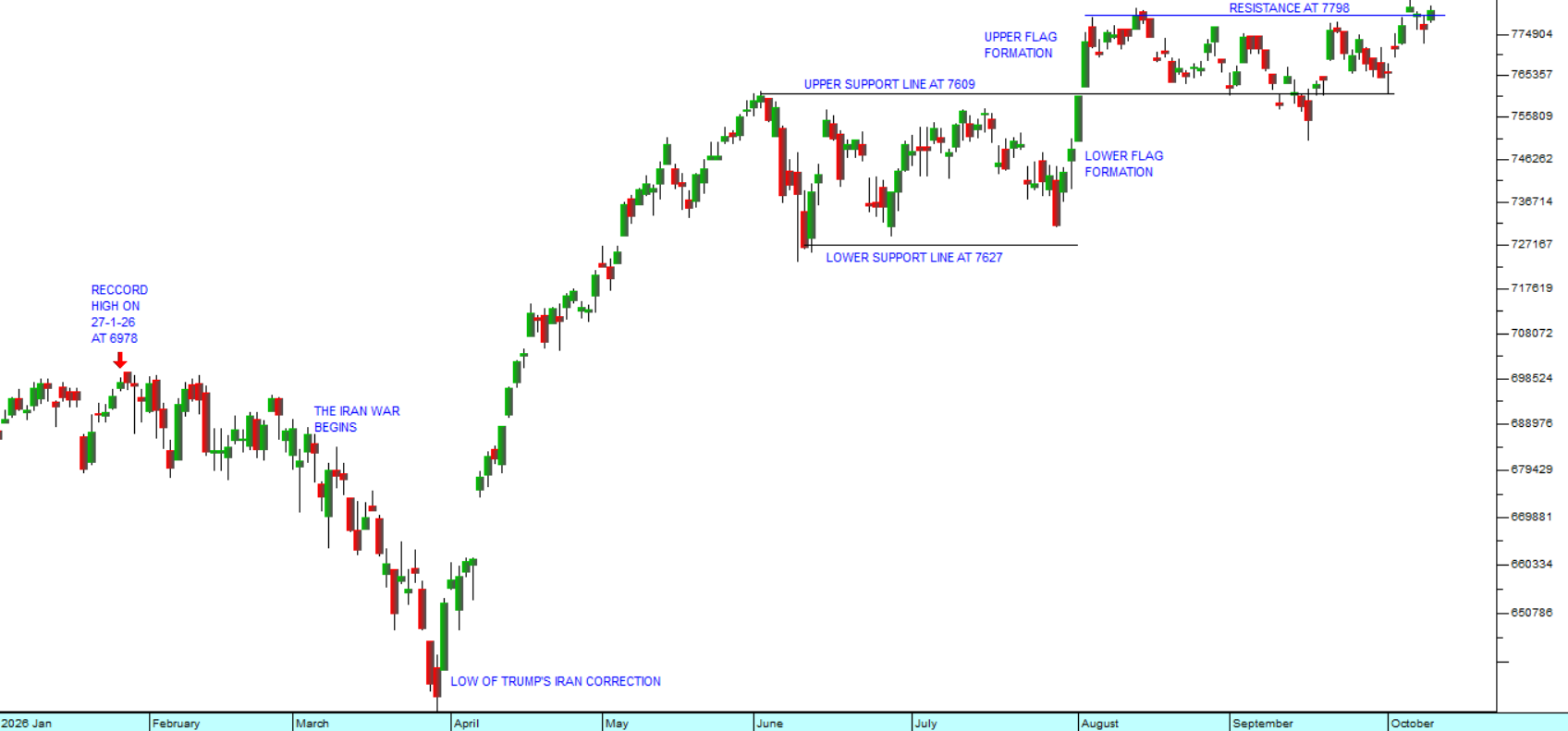
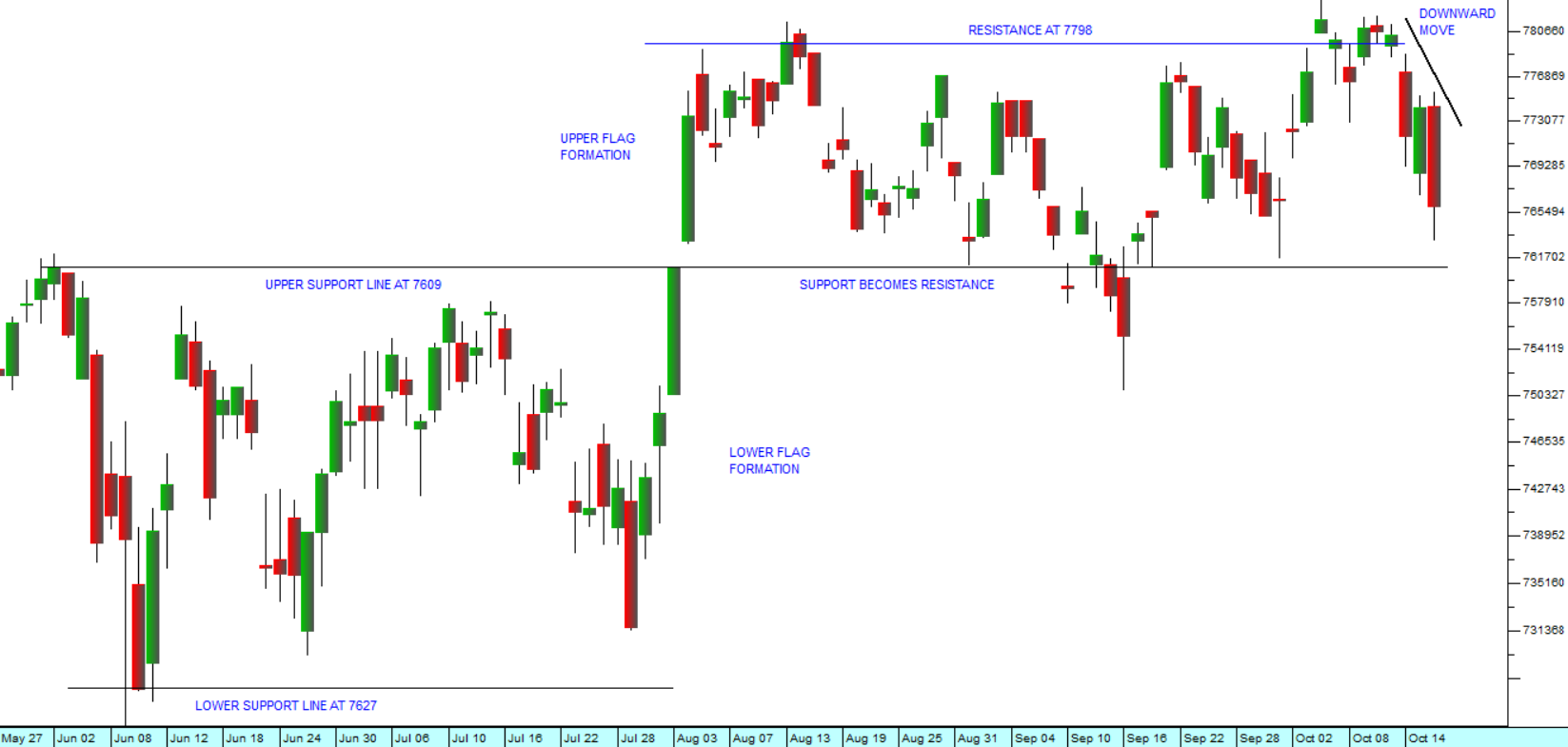
The S&P500 index has been trying to discount all these disparate forces and is basically moving sideways since it broke above the key support/resistance level at 7609. Consider the chart:

S&P500 Index : 25th March 2026 - 11th of September 2026. Chart by ShareFriend Pro.

There can be little doubt about the bullish sentiment which underlies the extended sideways market in the S&P. The news coming from big tech companies appears to be slowly overcoming the bad news coming out of the Middle East. The unexpected spike in the oil price to $110 was short-lived, but it did unnerve the market for a day. That was quickly rectified the next day.

And in the background is the looming mid-term election in America, which is increasingly focusing the Trump camp’s attention, resulting in some radical moves on his part like promising to pay every adult American $5000 if the Republicans win both the House and the Senate. The cost of this is a further $1,23 trillion to be added to the budget deficit already above $40 trillion. He also said that after the elections the petrol price will drop back to $2 per gallon – and anyone who believes that is not following what is happening on the ground.

Trump approval rating hits new low over Labor Day weekend

The Focaldata/Financial Times poll released on September 6, 2026, found that only 32% of Americans now approve of Trump's job performance. Trump's approval rating dropped three points from the previous month, the lowest since the poll series began in May. Critically, his approval among Republicans fell to 72%, a two‑point decline and a new low for that group. The poll was conducted from August 28 to September 2 with 2,178 U.S. adults surveyed. Only 17% of respondents approved of Trump's handling of inflation and the cost of living, while 69% disapproved.

In our view, the Republicans will almost certainly lose the House and the Senate race is now a “toss-up”. If he loses both, we can expect impeachment proceedings to commence promptly.

The S&P500 and markets around the world will ultimately be drawn higher by the AI driven boom in American and elsewhere. We expect new record highs on all indexes in due course.

The Currency  (2026-09-07)

Perhaps the best way to measure the progress of South Africa as a country is to look at our currency – especially against the so-called hard currencies of the Western World. Its strength or weakness gives a very good overall picture of how the country is doing economically, politically and in terms…

Perhaps the best way to measure the progress of South Africa as a country is to look at our currency – especially against the so-called hard currencies of the Western World. Its strength or weakness gives a very good overall picture of how the country is doing economically, politically and in terms of its image with overseas investors.

As an emerging economy, South Africa is not regarded as a poor country, but rather as one which is striving to become first world. For overseas investors this typically means a country and a currency which offers high risk and high potential return. Whereas a 10-year US Treasury Bill can offer the international investor a return of 4,8%, a South African 10-year government bond offers around 8,8% - that is 4% better, if the investor is prepared to take the risk of investing here.

We have a number of advantages over other emerging markets. Perhaps most importantly, we have relatively low inflation. In fact, due to the tireless efforts of Lesetja Kganyago, Governor of the Reserve Bank, our inflation rate is very comparable to many First World countries – and certainly far better than many of the other emerging economies. For example, Turkey’s inflation rate is 31,5%, Argentina is at 33,8% Egypt is at 14,9% and Columbia is at 6%.

We are generally grouped among those less risky emerging economies with lower inflation rates like Brazil (4,6%), India (4,4%), Mexico (3,4%), Indonesia (2,9%), and South Korea (2,8%). These are very comparable to the inflation rates of First World economies like Europe (3,3%), the United Kingdom (2,9%) and America (3,4%).

Approximately $19bn worth of rands are traded in our currency market every day on average. This makes it a highly liquid and very free currency exchange. Overseas investors can quickly take or sell large positions in what is a strong and well-organised market. This has tended to mean that the rand has become a proxy for all emerging economies. When international sentiment is risk-on they pile into our currency and government bonds. When it is risk-off, as it was when Trump began his war with Iran, they sell out quickly.

But overall, for at least the past 17 months the rand has been steadily appreciating against most first world currencies. In our view, this is related to the stabilising impact of the government of national unity (GNU) and the fact that the ANC is no longer in complete control. This together with the various initiatives set in motion by President Ramaphosa have meant that the economic environment has been steadily improving since April 2025.

On 10th April 2025 one euro would have cost you R21,90 and today it costs R18,53. On the same day, one British pound would have cost you R25,34 whereas today it costs only R21,56 and of course over the same time period the US dollar has fallen from being worth R19,75 to being worth R15,96. Consider the chart:

South African rand/US dollar : March 2025 - 4th of September 2026. Chart by ShareFriend Pro.

What is significant about this chart is that it clearly shows the steady improvement in international sentiment towards South Africa. The massive, well-informed international investors of the world are betting on our country and putting their money here instead of elsewhere. That is a significant vote of confidence and one which many South Africans caught up in the cut and thrust of daily life here do not appreciate.

In our view, the rand is about to break below its previous cycle low of R15.79 to the US$ made on 29th January 2026. The outcome of the municipal elections on 3rd November 2026 will have a significant impact. If the ANC loses further ground and the DA gains ground (which is what we believe will happen) then you can expect the rand to appreciate further.

A stronger rand is good for everyone in South Africa. It means lower fuel prices, lower inflation, lower interest rates, more stability and a better future for everyone involved in the economy. It is the most telling and reliable indicator of our progress as a nation.

Harmony Takes Off  (2026-08-24)

The gold price has been in a persistent correction since its record high on 28th January 2026. It has been in what technical analysts call a descending flag formation which we have drawn you attention to on several occasions. As with any formation we are looking for the direction of the breakout…

The gold price has been in a persistent correction since its record high on 28th January 2026. It has been in what technical analysts call a descending flag formation which we have drawn you attention to on several occasions. As with any formation we are looking for the direction of the breakout from that formation to give a clear idea of the future trend. In the case of gold, we have always been confident that it would break to the upside – and that is what it did last week on 19th August 2026. Consider the chart:

Gold price in US dollars : August 2022 - 21st Of August 2026. Chart by ShareFriend Pro.

The chart shows the US dollar price of gold since August 2022. It broke up out of a long-term sideways pattern in March 2024, and we drew your attention to that in the Confidential Report at the time. The chart shows how the upward trend was paused in 2025 until the precious metal broke above resistance at $3424 and it shows the all-time record high of $5305 on 28th January 2026.

The flag formation has taken place between two parallel downward sloping trendlines, showing how gold lost about $1000 over 5 months then found support before breaking to the upside.

As a private investor you should be thinking about which shares would have enabled you to capitalise on gold’s amazing run – and one of the best was Harmony. Of course, gold shares are always going to be speculative and risky, but under the right circumstances they can provide an excellent long-term investment.

In the case of Harmony, the key, for us, was its purchase of the Mponeng gold mine for $200m in September 2020. This was a very brave, potentially dangerous acquisition and we waited for some time before recognising that they were making a success of it. Mponeng is the deepest mine in the world. It is currently mining at depths of around 3800 meters with plans to go deeper to 4200 meters. This means that it is operating 2 kilometres below sea level from the Highveld near Carletonville. At those depths the grade is excellent - around 11,27 grams per ton – more than double the average grade for South African gold mines. The problem is that mining at those extreme depths is expensive and potentially very dangerous. It is the very definition of a high-risk, high-return investment.

We added Harmony to the Winning Shares List (WSL) on 16th November 2023 at a price of 9920c per share. It reached an all-time high of 40841c on 28th January this year before falling back as gold corrected. Since 3rd August 2026 it has been moving up strongly again as gold recovered. Consider the chart:

Harmony (HAR) : August 2023 - 21st of August 2026. Chart by ShareFriend Pro.

Harmony published an excellent trading statement on Friday last week, predicting that its headline earnings per share (HEPS) would increase by between 90% and 105% in US dollars. 

Altogether, Harmony has risen by more than 250% since we added it to the WSL nearly 3 years ago and we believe it will continue to perform well – but it remains a commodity share and hence both volatile and risky.

JSE Top 40

107,759.00 (+0.19%)

All Share

115,165.00 (+0.15%)

Financial 15

25,787.00 (+0.56%)

J200
J203
J212
Top Gainers
# Code Name Close (c) % move
1 OAO OANDO 19 +26.67%
2 OMN OMNIA 11767 +14.59%
3 ACT AFRO-C 70 +11.11%
Top Losers
# Code Name Close (c) % move
1 SSK STEFSTOCK 569 -8.08%
2 JBL JUBILEE 50 -7.41%
3 HLM HULAMIN 225 -7.02%

Top Movers – Charts

Top Gainer: OAO
Top Loser: SSK