The Confidential Report - October 2026
America
The US economy created just 29 000 jobs in September month which was well below the 84 000 that analysts and investors were expecting and the 133 000 jobs created in August. At the same time the unemployment rate edged up to 4,2% from August’s figure of 4,1%. This had the effect of making investors more positive about the outcome of the Federal Reserve Bank’s monetary policy committee (MPC) meeting later this month. Most investors now believe that interest rates will not be raised at the meeting on the 27th and the 28th of October and that the prospects of further rate hikes later in the year are also diminished.
The Iran war is still having the effect of constraining Wall Street and turning what would otherwise be a runaway bull market based on the productivity gains in AI into a pattern of sideways markets. Consider the chart:
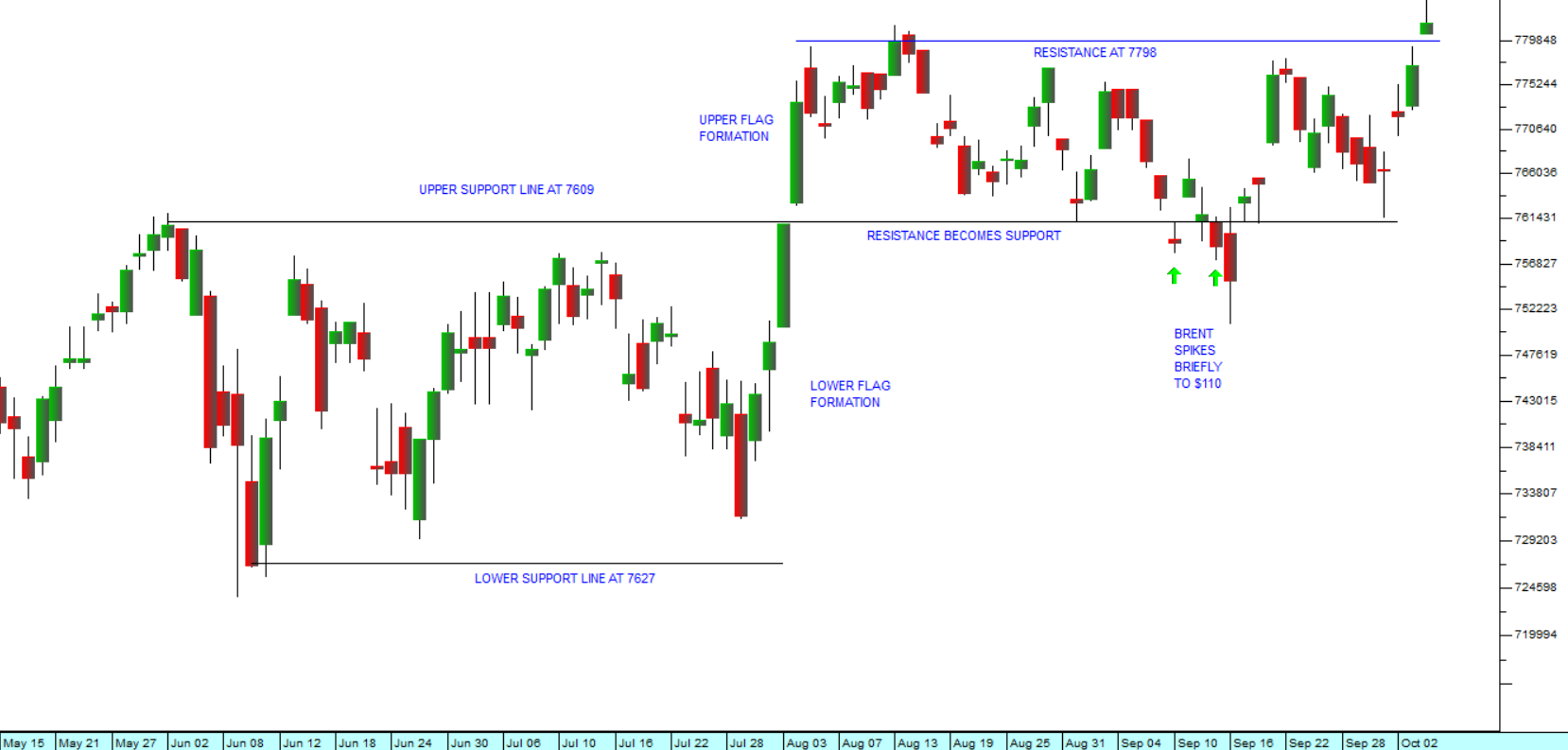
As you can see here the S&P500 was moving sideways in the lower flag formation during June and July this year and then broke up to the new record high at 7798 on 13th August which then became the upper boundary for another protracted sideways movement (the upper flag formation) which is still on-going. The support level at 7609 was briefly broken when the price of North Sea Brent spiked up to $110 earlier in September, but quickly settled back into the upper flag formation when the price of oil fell back to just over $100.
What is notable is that the yield on the 10-year US treasury bill rose to a new high of 5,3% - its highest level since 2002, after the 9/11 attack. This shows that investors have become increasingly concerned about the long-term stability of the US economy, especially now that the federal debt is above $40 trillion. This uncertainty means that investors now require a higher level of interest if they are going to continue funding that debt. In general, when the effective yield on bonds gets very high like this, investors will be less attracted to shares and more attracted to bonds – which can cause share prices to fall. So far, however, the optimism surrounding AI has been sufficient to swallow both the rising bond yield and the high oil price. One can only imagine how high the S&P would have been by now if long-bond yields were normal and the Brent oil price was back below $70.
In August 2026 the US economy added 162000 jobs (later revised down to 133 000) – well above economists’ expectations of 56 000 and a number which really got investors very worried about the outcome of the MPC’s October meeting. That figure showed that the US economy is still performing and creating new jobs – a fact which has been supported by the strong performance of S&P500 companies in the second quarter.
It is apparent that the AI boom has lifted analysts’ expectations of S&P earnings by 32% from a year earlier and then 86% of companies beat analyst estimates. Artificial intelligence is increasingly being translated into higher corporate profits in a wider range of companies. Alphabet’s earnings for the quarter came in at $98bn while Amazon posted a $53,4bn non-operating pre-tax income mainly because of its investments in Anthropic. In the second quarter Nvidia’s income was double what it was in the same quarter last year.
There is also evidence that the strength of the market is spreading beyond the largest AI companies. The other 493 companies in the S&P500 were reporting blended second-quarter earnings growth of approximately 32%, according to FactSet, while earnings growth for the broader index remained exceptionally strong even after excluding the unusually large investment gains recorded by Alphabet and Amazon.
The fact that the current strength of the S&P500 is supported by substantial underlying earnings distinguishes today's market from some of the more speculative aspects of the late-1990s technology boom. Unlike many of the companies whose valuations were driven largely by expectations of future growth during the dot-com era, today's largest technology companies generate enormous revenues and profits. This does not mean that current valuations cannot be excessive, but the underlying businesses are considerably more substantial.
The scale of the current market concentration is nevertheless striking. As of early October 2026, at least 13 US-listed companies had market capitalisations above $1 trillion. They included Nvidia (approximately $5.65tn), Apple ($4.88tn), Alphabet ($4.20tn), Microsoft ($3.84tn), Amazon ($2.71tn), SpaceX ($2.09tn), Meta ($1.85tn), Broadcom ($1.70tn), Tesla ($1.46tn), Micron ($1.21tn), Berkshire Hathaway ($1.08tn), Eli Lilly ($1.08tn) and AMD ($1.03tn).
Many of these companies are benefiting directly or indirectly from the artificial-intelligence investment cycle, although the trillion-dollar group also includes companies such as Berkshire Hathaway and Eli Lilly whose valuations are driven by very different businesses.
Looking ahead to the 3rd quarter earnings, the expectation is that S&P companies will grow earnings by 29,5% compared to the same quarter last year. Total third quarter earnings for the nine S&P 500 companies that have reported results so far are up over 16% from the same period last year with 11% higher revenues.
But the focus of the market on AI is best demonstrated by Nvidia and Apple which now comprise about 15,7% of the total S&P500 index. Wall Street has never before been as concentrated on the progress of just two shares as it is now. Even in the dot-com boom, the concentration in the top two shares was not as great as it is now. Apple shares traded as high as $345 on Tuesday 22nd September. The stock has been moving up rapidly since Apple unveiled the iPhone 18 and its first foldable, the Duo, earlier this month. It is up 25% so far this year.
As the market moves higher there are four potential problems which could take the market into a correction:
- We are less than a month away from the US mid-term elections now and the Republicans and Trump are not doing well. It is difficult to predict what Trump might do in his desperation to retain power in America. We are confident that whatever he does that negatively impacts markets, it will be of a short-term nature consistent with his reputation for always backing down.
- The Fed has raised interest rates and indicates that it will raise rates further if necessary. The new Fed Chairman, Kevin Warsh, has said his goal remains to bring inflation down to 2% and he does not seem to be very concerned about what Trump wants.
- Consumers in America are now being hit with combined effect of much higher fuel costs and rising interest rates which may well result in a loss of consumer confidence and reduced consumer spending.
- Share valuations are very high historically and are discounting a considerable amount of “blue sky” potential, especially in high tech and AI shares. This makes them vulnerable to unexpected shocks.
The decision of the monetary policy committee (MPC) to increase interest rates in America at its September meeting was not unexpected. The climb in the price of fuel as a direct result of the war in Iran has caused inflation to spike and made it the MPC’s primary concern. The committee also indicated that it would hike rates further in the coming months if necessary to contain inflation. Core inflation has remained stubbornly above the Federal Reserve Bank’s objective of 2% for more than five years now. The rate hike was the first in three years and was unanimous. Kevin Warsh, the Fed governor recently appointed by Trump clearly went against Trump’s wishes for lower interest rates showing the continued independence of the Fed and the MPC. The announcement had a negative impact on stocks, but we believe that they will recover especially as more good news comes out the AI sector.
As always, our advice in this situation is to maintain a strict stop-loss strategy for all your investments. That is your ultimate protection against any bear market.
The oil price remains a major factor in markets and economies around the world. In December last year, the price of North Sea Brent fell as low at $59,55 per barrel showing the impact of the long-term trend toward renewables throughout the world. When Trump and Netanyahu initiated the Iran war the price shot up to a high of $118 before subsiding on various efforts to negotiate a peace plan. That came to an end in July this year when the Memorandum of Understanding was breached by both sides and the war resumed. A disturbing escalation was the bombing of the Saudi pipeline and the closure of the Strait of Bab-el-Mandeb which has now pushed the price back above $100 where it is hovering amidst a great deal of uncertainty and conflicting news. Consider the chart:
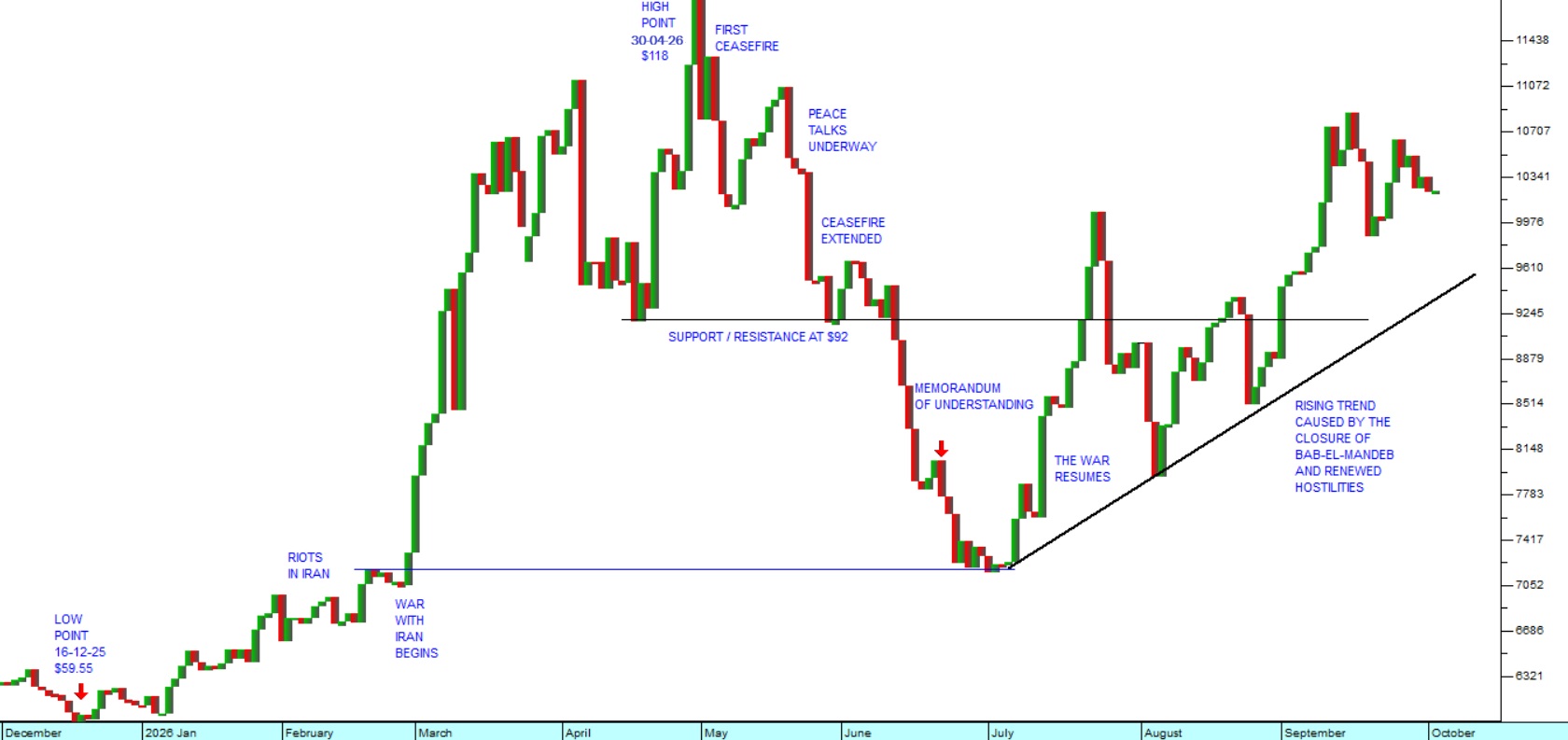
When Brent went above $100, the petrol price in America went up to over $4.30 per gallon and diesel went as high as $6.50 per gallon. These numbers are very unpleasant for American consumers and disastrous for the farming community.
The repair and recommissioning of the Saudi pipeline helped ease supply concerns which caused the price of Brent to fall back. The higher price of oil has pushed the price of petrol up again in America just before the crucial November mid-term elections – not something that Trump and the Republicans want. Trump originally said that the war with Iran would be over in three weeks and it has now been going on for nearly 8 months – with no sign of stopping. Trump’s enduring problem is that this is one thing he definitely cannot blame on the Democrats. The average price of a gallon of petrol in the US will remain above $4.30 in the coming weeks unless Trump can do something to calm the situation down – which seems unlikely.
Trump is again trying to influence the Federal Reserve Bank’s monetary policy committee (MPC) decisions on interest rates by saying that America should have the lowest interest rates of any country in the world and that high interest rates put them at a competitive disadvantage. In saying these things Trump is demonstrating his extraordinary ignorance of economics and he is interfering in a discussion which should be totally independent of the executive branch of the government. The MPC consists of 12 members, 7 Federal Bank board governors of whom are permanent members appointed by the US President and confirmed by the Senate. Four are chosen from the remaining 11 Federal Reserve banks and then there is the President, Kevin Warsh, who has a casting vote. The MPC is supposed to decide the level of interest rates based on its dual mandate to ensure price stability (i.e. control inflation) while maximising employment. The President of the country does not have a vote and should not be involved at all.
In the background to all this are the mid-term elections with Trump’s approval rating at rock-bottom lows and some Republican’s now actively dissociating themselves from his policies. Iran has taken full advantage of the situation and managed to keep fuel prices very high in America despite all Trump’s threats and bluster. In our view there is now a real chance that the Republicans will lose both Houses – perhaps by quite a wide margin. If they do, the next logical step would be for the Democrats to launch impeachment proceedings against Trump. At the very least, it appears likely that he will become a lame dog President for the remainder of his term in office.
Ukraine
Trump’s two sycophants, Jared Kushner and Steve Witkoff, launched an effort to negotiate a peace deal in the Ukraine/Russia war. Both sides agreed to a 3-day ceasefire on each other’s capitals while talks took place. This was probably a last-ditch effort by Trump to improve his image and that of the Republican party before the November mid-term elections. In our view, the chances of this and similar initiatives being successful are minimal. In the face of a stalemate on the frontline, both sides have recently escalated long-range attacks with a devastating impact on infrastructure. Russia’s oil and gas industry has been severely impacted while nightly attacks on Ukraine’s cities with severe casualties have become the new normal. In this war of attrition, it is hard to say which side is winning, but there can be little doubt that the Russian economy is now in great difficulty, and the Russian population is beginning to fully appreciate the impact of the war. The danger is that Russia will become desperate enough to escalate the war by attacking a NATO country – if only to justify the need to conduct a nation-wide subscription to enlist between 300 000 and 800 000 more men. Its losses on the frontline have been above 40 000 men a month, in the last two months. On the single day of 28th September 2026, the Russians lost a record number of 2090 men killed, wounded or missing. These numbers appear to us to be unsustainable even for Russia. Something has to give.
Political
The fact that the ANC failed to register more than 180 candidates for the upcoming November municipal elections is a direct reflection of its growing incompetence as a dominant party. The ANC is trying to blame the Independent Electoral Commission’s system, but there is ample evidence that the system was working perfectly up to the deadline on 28th August 2026. Unless the ANC can come with something more substantive, it is likely to have to do without these candidate registrations in the coming election which will impact its ability to contest various wards. In our view, the error is typical of the ANC’s cavalier attitude and growing incompetence.
Cosatu’s apparent disillusionment with the ANC and especially the ANC’s management of the municipalities could cost the party seriously in the coming elections. Cosatu represents approximately 1,5 million members across the country and was a member of the so-called tripartite alliance with the ANC and the South African Communist Party (SACP). The SACP parted ways with the ANC some time ago over its engagement with business and now Cosatu is moving in the same direction. Current indications are that the ANC will only garner about 37% of the vote in the upcoming election while the DA could get as much as 30%. If these predictions are correct then there will be a significant shift in the balance of power within the government of national unity (GNU) which in our view can only be good for the economy and the stock market.
The R1 trillion rand in the February 2026 budget earmarked to be spent on improving infrastructure over the next three years includes giving the municipalities over R200m. This money and more was, among other things, to be allocated to shoring up the failing water system which is beset with leaks and illegal connections. The Minister of Finance, Enoch Godongwana, has frequently railed against the poor management of municipalities and state-owned enterprises (SOE) identifying them as a significant impediment to economic growth. In our view, while the ANC has managed the money supply extremely well during its time in office, it has failed miserably in service delivery at every level, including the provision of clean water – which will cost them dearly in the coming election.
Economy
The Reserve Bank’s business cycle indicator fell by 1% in July 2026 due to a drop in building plans approved and a fall in commodity prices, especially platinum group metals (PGM). The decline reflects the impact of the sharp increase in fuel prices since the start of the Iran War. The indicator is designed to anticipate changes in the direction of the South African economy’s cycle. Until the start of the Iran war the economy was gradually recovering and moving into a stronger upward trend. In our view, the war in Iran will probably be relatively short-lived, but will last until at least the end of this year. That means that we will experience the second-round effects on our inflation rate.
Stats SA reported that the South African economy lost nearly 100 000 non-farm jobs in the year to 30th June 2026. The official unemployment rate was sitting at 33,6% at the end of the second quarter of 2026, almost 1% worse than at the end of the first quarter. Youth unemployment for people aged between 15 and 24 years old was at 47,5%. The figures show that the growth in gross domestic product (GDP) is insufficient to absorb the thousands of school leavers who enter the job market each year. For that to happen, we need growth to rise to somewhere between 3% and 5% and that does not appear possible with the current administration.
With the price of petrol and diesel likely to go up by at least a further R2,50 per litre in November 2026, consumer spending in the economy is likely to remain subdued. Despite this there have been some early indications of renewed growth. Business Day reports that Payinc's Economic Index ticked up slightly by 0,8% in the month of August 2026 following July’s 0.6% increase. This means that the index is 2,8% above where it was at the same time last year. With the war in Iran likely to continue for the time being, fuel prices are likely to remain high or even increase further at least until the end of the year. There is also the possibility that the monetary policy committee (MPC) will increase interest rates again to contain the inflationary impact of higher fuel prices. All of this is bad news in the short term, but the South African economy is remarkably resilient and will recover rapidly as soon as fuel prices come down. The hike in fuel prices impacts poor families the most because transport represents a very large percentage of their disposable income. Business Day reports that electricity and transport together consume about 64.5% of the earnings of a minimum-wage worker, leaving lower-income households with very little income for food and other essential expenses. Interest rates have also increased putting further strain on the economy.
The ABSA Purchasing Managers Index rose back above 50 in September 2026 signalling a return to growth. Durban harbour remains a problem area with costly delays in getting exports out. The R1.30 increase in the price of petrol in September is obviously a negative and rising interest rates are also now a major factor. In our view, the South African economy has managed the external blow of higher fuel costs extremely well, largely because inflation was relatively low in this country before the Iran war started. October and November’s fuel prices hikes will make the situation worse.
Producer price inflation (PPI) fell by 0,4% month-on-month in August 2026, reflecting the fact that the fuel price has temporarily stabilised at higher levels. This stability is not expected to continue however as Trump seems to be nowhere near a ceasefire with Iran and the price of diesel is expected to remain elevated. The cost of water and electricity rose by nearly 8% in year to the end of August 2026. Overall, however, South Africa is still benefiting from the fact the inflation was very low when the war in Iran began because of the continuous efforts of Reserve Bank to keep it contained. Interest rates have risen by half a percent since the war began and may have to go higher.
About 22% of new vehicles sales in South Africa are now Chinese imports – mainly because they are significantly cheaper than the locally-produced vehicles. The lower cost of these vehicles is endangering the local vehicle manufacturing industry, but it is very good for consumers. Because of the demand, some Chinese manufacturers are taking steps to produce their vehicles locally rather than simply importing them – which will obviously result in more jobs being created here. In the meantime, the local manufacturers are being forced to compete on price.
The Bureau for Economic Research’s (BER) survey of business people and analysts shows that inflationary expectations remained in the third quarter of 2026 at 4,4% and are expected to fall to 3,9% by 2028. The lower inflationary expectations are a direct result of the tight control which the monetary policy committee (MPC) has maintained over the money supply in the years prior to the Iran war which brought the inflation rate in South Africa down to 3%. We expect gross domestic product (GDP) to grow by about 1% this year barring any radical developments or further external shocks. The economy has digested the higher oil price reasonably well, and should benefit as oil prices come down as they inevitably will in due course.
As the oil price once again rises due to developments in the Middle East, business confidence levels in the South African economy have been declining. The ABSA/Bureau of Economic Research report indicates that as many as 70% of respondents indicated that they found business conditions less than satisfactory. This measure has basically not shown confidence since the end of 2007. Obviously, the recent 25-basis point hike in interest rates has made the situation worse. In our view, the oil price will remain elevated until at least the end of this year. With the bombing of the Saudi Arabian pipeline and the closure of the Bab-el-Mandeb Strait, even more oil has been taken off the world market. The world economy is adjusting rapidly, but in the short-term prices will remain high.
South Africa’s gross domestic product (GDP) shrank by 0,2% in the second quarter of 2026 as a direct result of the jump in fuel prices following the start of the Iran war. This follows the first quarter’s lacklustre 0,4% growth and is also a result of contractions in the sales of platinum group metals (PGM), gold, manganese and iron. This together with falls in food, beverages and furniture demand resulted in the negative growth for the quarter. In our view, the drop in economic activity during the quarter was a temporary effect of the jump in oil prices and growth should resume once oil prices come down. The strength of the rand has done much to mitigate the higher oil prices, but the prices of petrol and diesel are still exceptionally high and are affecting business and consumer spending.
Manufacturing production increased by just over 1% in the year to 31st July 2026. This is its first increase for three months and reflects the fact that the fuel price has stabilised somewhat. Despite the improvement, confidence levels remain low in the sector due to constrained export demand and weak local sales. Food and beverages were up just over 4% and rubber and plastics just over 3%. The largest decline came from the wood and paper section which includes publishing - where production fell by more than 7%. In our view the manufacturing sector will only begin improving when the South African economy is has structural reforms and when the fuel price is more reasonable.
Eskom is, of course, passively resisting all efforts to establish an independent transmission operation (TSO) because that would cut their income by as much as 37% and force them to compete in open market with renewable energy suppliers. The loss of 37% of their income would make servicing their enormous debt very difficult if not impossible while competition would force them to review their exorbitant salary structure. If there ever was a gravy train in the New South Africa, Eskom was undoubtedly it. Holders of Eskom debt are naturally very worried about how their debt will be serviced after the TSO is unbundled and that is probably the key problem for government. But with the unbundling, the regular above-inflation salary increases will continue and Eskom electricity in this country will continue to be over-priced, forcing a switch to renewables.
It is not really surprising that America, despite its aggressive stance towards South Africa has decided to allow us to continue to benefit from the African Growth and Opportunity Act (AGOA) – at least for the next two years. We wanted the arrangement to be extended for 15 years, but this is better than nothing. The fact is that with all Trump’s on-again, off-again tariffs most South African exporters have found alternative markets for their products – so the impact of our membership of AGOA has been minimised.
The prospect of El Nino is looming large in the agricultural sector. Farmers are striving to retain as much soil moisture as possible and to avoid overgrazing. At this stage South Africa is expected to experience very hot temperatures combined with low rainfall in the coming months. This could have a significant impact on the maize crop this year and result in rising food prices. Thousands of low-income group families in South Africa rely on growing a small area of maize to get through the year and provide adequately for their families. In a bad season they are forced to seek government aid or rely on charities. Worldwide it is expected that as many as 50 million people could experience food shortages in the coming year with Southern Africa and South America expected to be the hardest hit. In South Africa average dam levels are above 95% and soil moisture remains high which bodes well for whatever the weather does.
Business confidence in South Africa worsened slightly in the third quarter with the RMB/BER confidence index falling by 1 point to 38. Confidence levels are a function of business activity and prospective sales. Most businessmen are now focussed on the outcome of the municipal elections in November this year. The hope is that they will result in a business environment which is more conducive to business with improved service delivery and better regulatory certainty. Business confidence has a direct bearing on employment levels as companies only look to employ more people when they are confident of the future. The survey found confidence in the manufacturing sector to be particularly low.
A recent study shows that the sharp spike in the oil price since the commencement of the war in Iran has cost the global economy about $330bn and South Africa about $3,5bn (R56,35bn). Obviously, this has had a direct impact on both consumers and businesses, forcing the monetary policy committee (MPC) to raise interest rates by 25 basis points and causing some businesses to close. Consumers have felt the impact on their take-home pay resulting in lower spending. The oil price appears to have stabilised around $100 for North Sea Brent and in our view should fall from those levels in due course. Thousands of South Africans have made vehicle purchase decisions based on the raised price of petrol and diesel, choosing to buy an electric vehicle rather than one powered by an internal combustion engine.
It is ironical, but predictable that Eskom now has an electricity surplus. Apparently over the next few years it will have 2 or 3 gigawatts of power beyond what it can sell. The main reason is that it has priced itself out of the market and lost business to companies and consumers that have installed renewable energy systems. The only real solution to this problem would be to cut their prices and make themselves more competitive – but that would mean cutting their enormous salary bill – which seems unlikely. Their current financials for the year to 31st March 2026 show that they made a profit of more than R30bn – perhaps it would have been wiser to reduce their prices and make a smaller profit.
The South African trade surplus rose to R20bn in July from June’s R17bn mainly due to exports to the rest of Africa. The main exports were cars, manganese and coal while the main imports were fuel. So far this year the country has a trade surplus of R131bn compared to last year when the surplus at this stage was R100bn. Mineral exports were up 14%, but exports of precious metals and diamonds fell by 21%. The relative strength of the rand makes our exports more expensive on world markets while making imports cheaper. It is good that we have a consistent trade surplus, especially when the cost of oil has been so high.
The Rand
A month ago at the last Confidential Report on 3rd September 2026, the rand was hovering just above R16 to the US dollar and had broken decisively below the resistance at R16.16. Since then, it has made a double top and has weakened back as far as R16.70.
At the current level of R16.66, the rand looks like it might be making a third stronger turning point. Consider the chart:
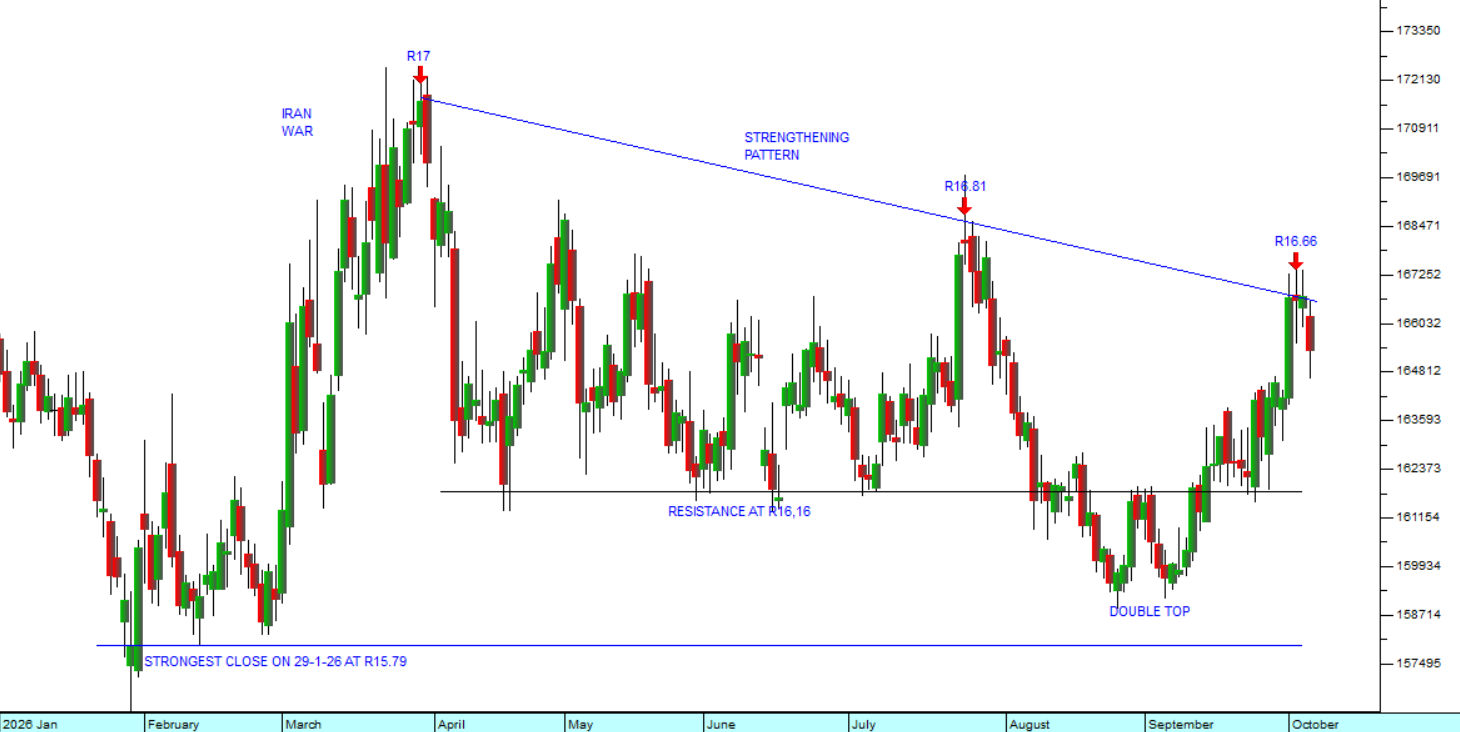
The chart is inverted, so the lower it goes the stronger the rand is. This means that the rand has made in effect a strengthening triple low. The weakest points were R17.00 on the 31st of March 2026, R16.81 on the 27th of July and now at R16.70. Each was successively a little stronger than the previous weak point.
In our view, the rand has held up remarkably well since the war in Iran began and fuel prices spiked. This is because of the Reserve Bank’s strict discipline in the years and months before that which put us in a strong position to weather the storm. The relative strength of our currency has shielded us against the worst effects of the jump in oil prices.
We now expect the rand to continue moving sideways at least until the end of this year and then to resume its strengthening path sometime next year, especially if the war in Iran is resolved at some stage.
GOLD
The gold price peaked at $5305 at the end of January this year and has since been in a downward trend in a descending channel. At the end of August 2026, it broke out of that channel to the upside, but has since been pushed back inside that channel by the extraordinary increase in the effective interest rate on the US 30-year Treasury Bond. Consider the chart:
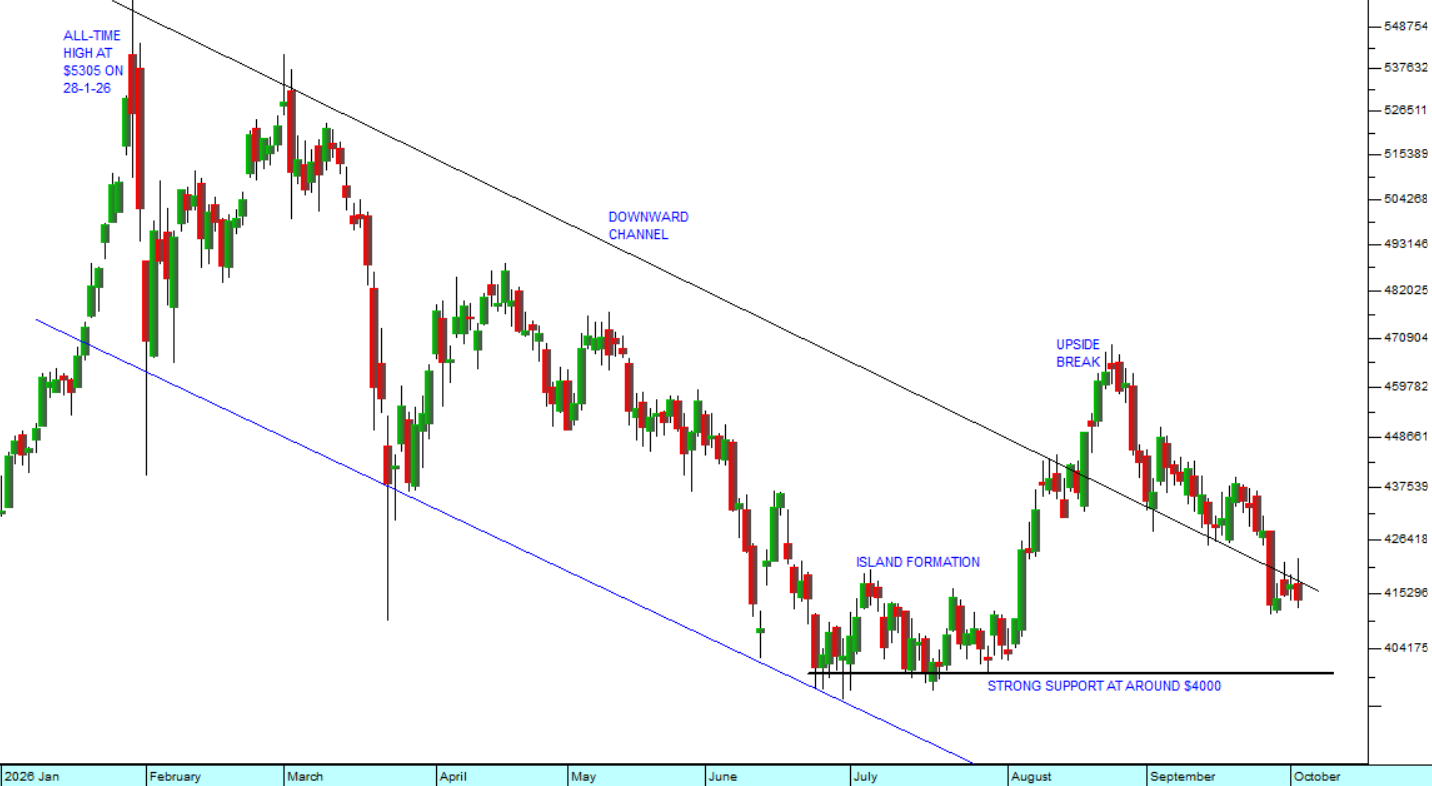
As the world’s securest asset, gold naturally competes directly for investor funds with the Treasury Bond which is viewed by some investors as the second most secure asset. The Treasury Bond has the significant advantage of paying interest where gold pays no returns at all. The spike in the 30-year Treasury Bond to an effective rate of 5,6% recently takes it into record territory and makes gold look relatively unattractive. The chart below shows the steady rise in the effective yield on the US 30-year Treasury Bond:
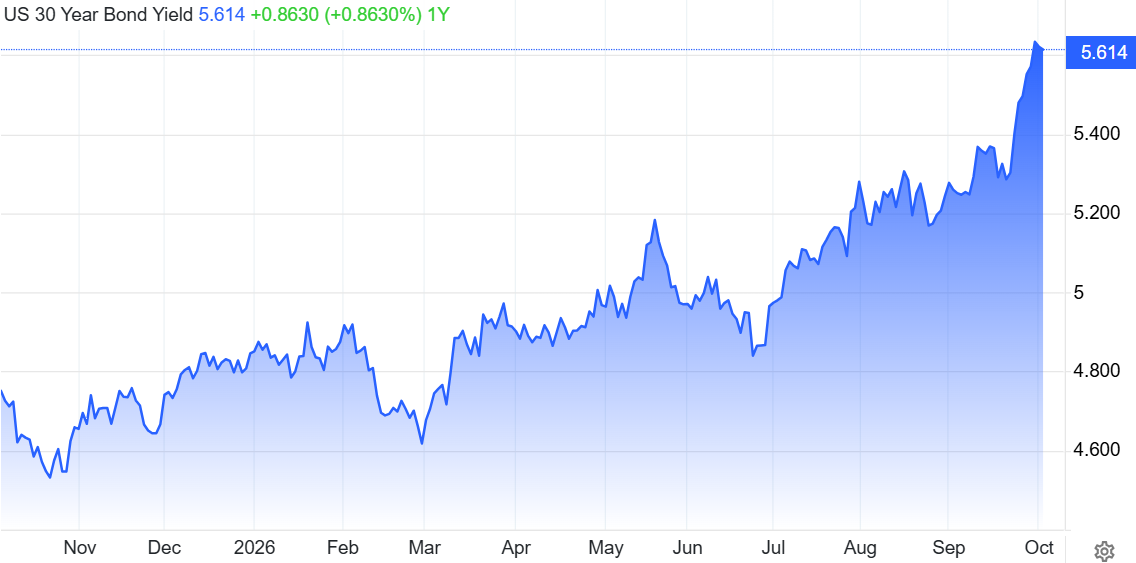
US 30 Year Bond Yield : November 2025 - October 2026. Source: https://tradingeconomics.com/united-states/30-year-bond-yield
As you can see there is a direct inverse correlation with the fall in the gold price for most of this year. The rising effective yield on the Treasury Bond shows that investors are becoming increasingly nervous about the long-term future of the US economy and are therefore demanding a higher and higher percentage return to fund its out-of-control deficit.
In the end, we expect the gold price to hold above the support at $4000 and ultimately to continue rising.
COPPER
The price of copper has continued to rise over the past month, extending the bull run that it has been in since July 2022. We expect the upward trend to continue as the roll-out of renewables and artificial intelligence (AI) gain momentum. The price has more than doubled from $7000 per ton over the past four years and three months to a record high of over $14700 per ton last month. We expect the upward trend to continue as more capital is invested in renewables and AI.
Companies
OMNIA – Takeover bid
Omnia is a manufacturer of chemicals used in agriculture (fertilisers), mining (explosives) and various industries. It operates primarily in South Africa, but its products are sold throughout Southern Africa and abroad. In its latest financial statements for the year to 31st March 2026 the company reported revenue up 6% and headline earnings per share (HEPS) up 21%.
The company benefited in some ways from the war in Iran and the closure of the Strait of Hormuz because that restricted the flow of agricultural chemicals onto world markets resulting in higher prices. The company was able to pay a dividend of 470c for the year, plus a special dividend of 280c. During the year it also bought back and cancelled 187436 of its own shares at an average price of 6465c per share returning a further R12,1m to shareholders.
We became interested in Omnia at the end of last year and finally added it to the Winning Shares List (WSL) on 12th January 2026 at a price of 8207c. Consider the chart:
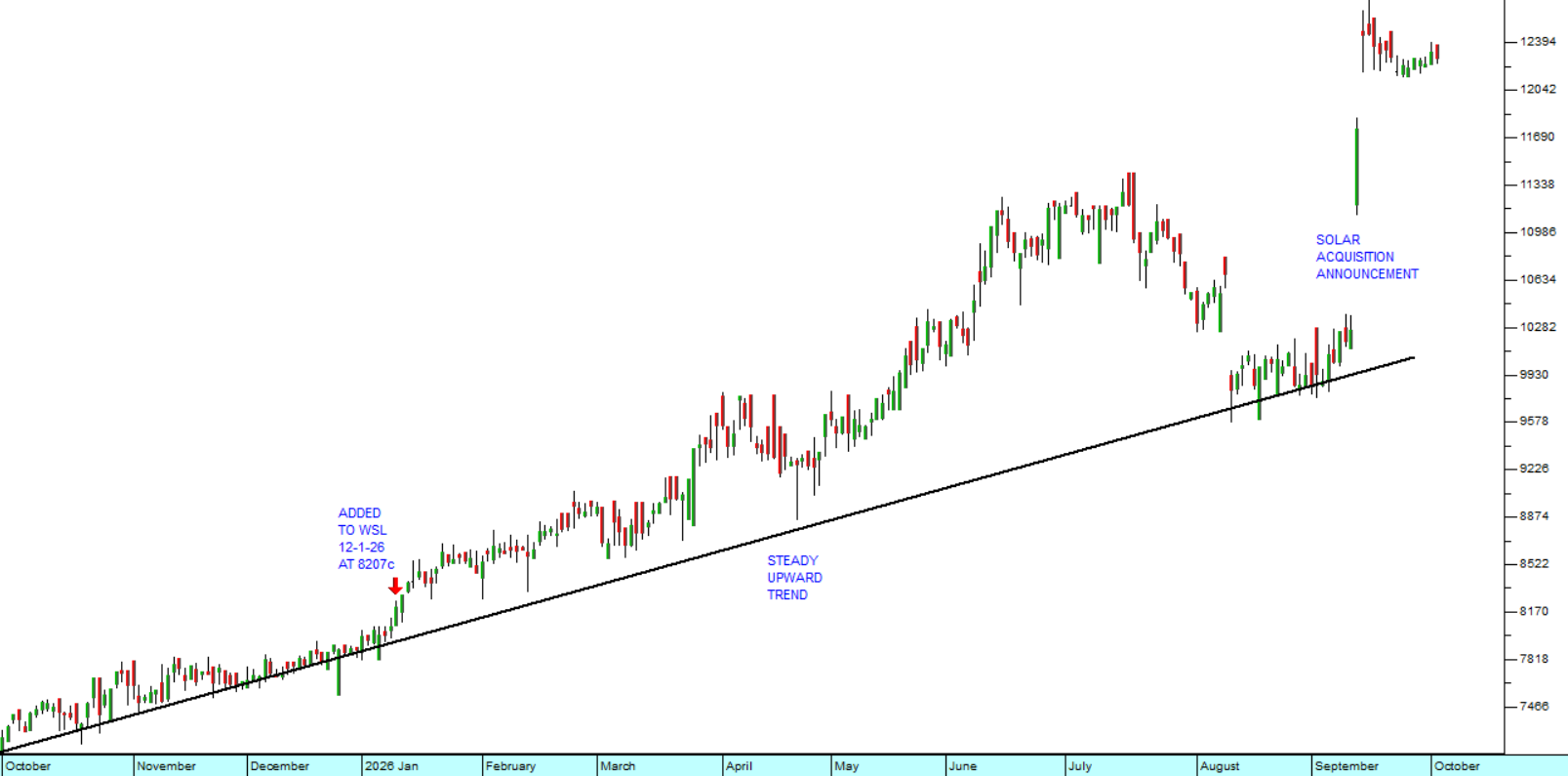
The international chemicals company, Solar Group, made an offer to buy 100% of Omnia’s ordinary shares for 13450c causing the share price to rise quickly.
Altogether, if you had acquired the shares on 12th January 2026 you would have made a profit of 73% in about 9 months.
REMGRO
Remgro is a diversified industrial and financial services group that has been releasing value into the hands of shareholders for some time now. We first became interested in the share back in February and March of 2025 when it broke up out of an island formation. We added it to the Winning Shares List (WSL) on 3rd July 2025 at a share price of 16422c. Consider the chart:
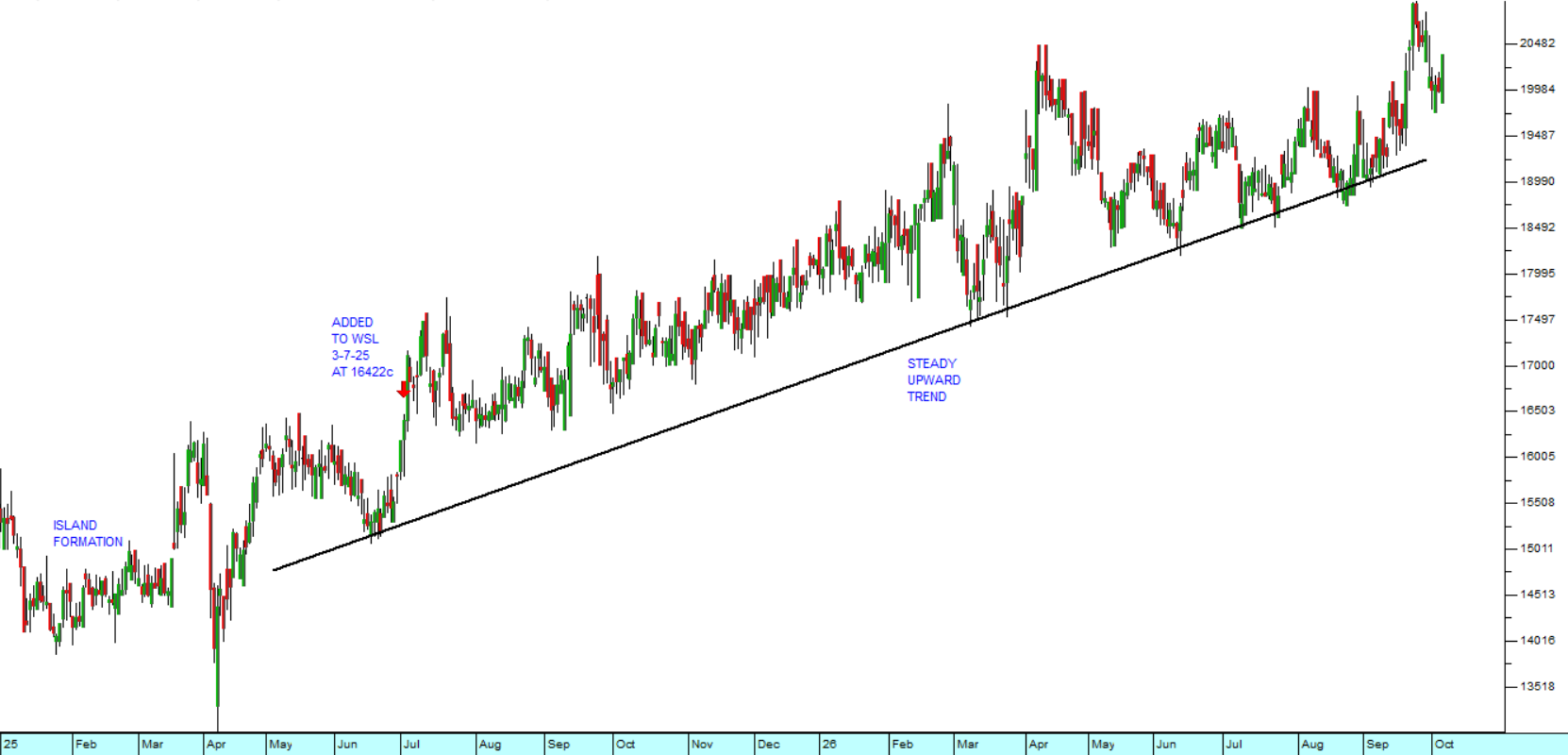
In its latest financials for the year to 30th June 2026 the company reported headline earnings per share (HEPS) up by 42,2% and a cash position of R20,3bn against debt of approximately R4,5bn. This is a solid blue-chip share that is growing rapidly and returning significant value to shareholders. In the 2026 financial year the company paid out a total of R11.45 in cash distributions to shareholders.
So far it has gone up 22,13% since we added it to the WSL just 3 months ago. We consider it to be an excellent addition to any private investor’s portfolio.
PAN AFRICAN
We originally added Pan African to the Winning Shares List (WSL) on 31st January 2024 at a price of 430c. Two months later we drew your attention to the fact that gold had broken up above its resistance level at $2060. Since then, Pan African has been on a roller-coaster ride, reaching as high as 3881c on 2nd March 2026. Consider the chart:
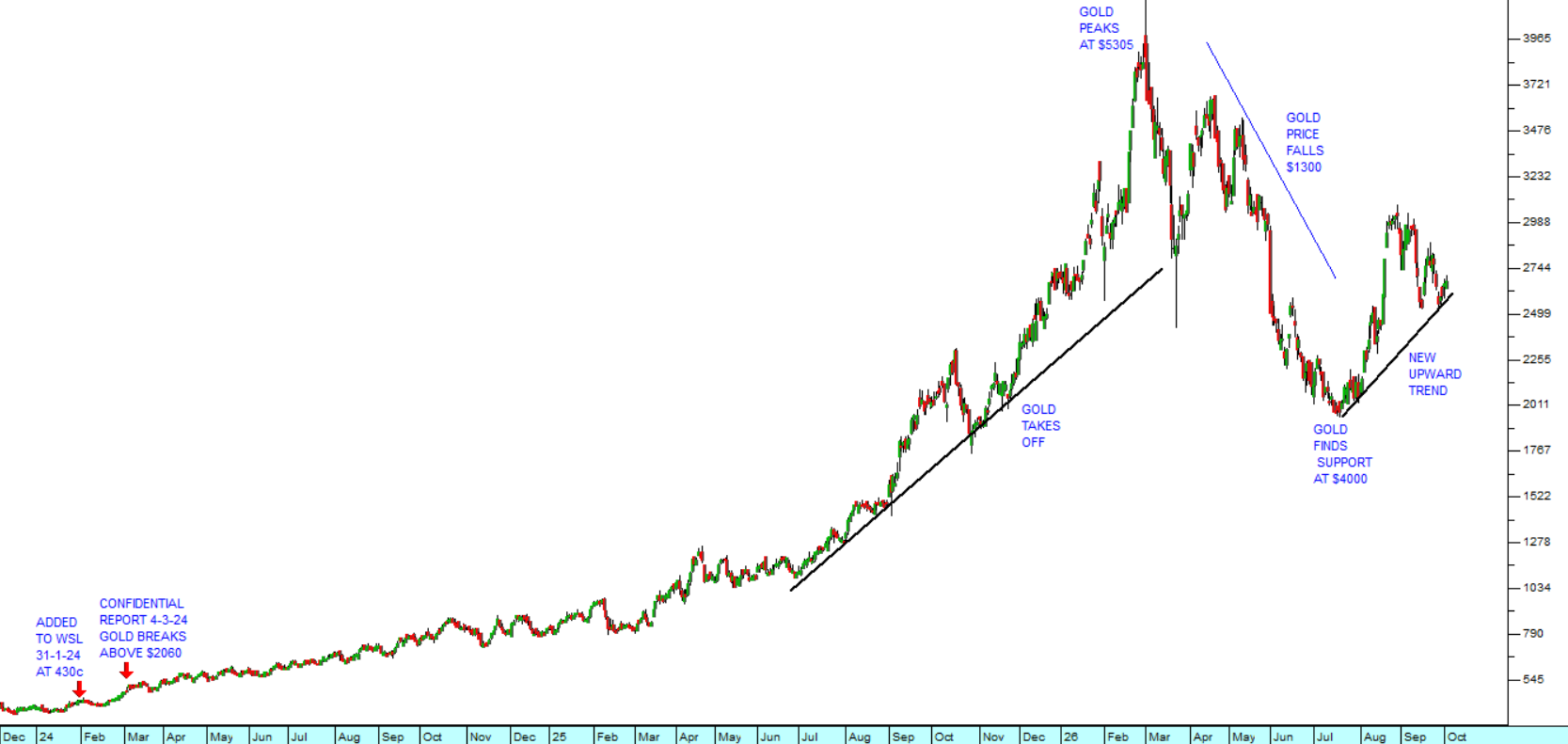
Gold reached an all-time high of $5305 on 28th January 2026 and then began a massive correction losing over $1300 before finding solid support at $4000. Pan African followed it down. Since then, however, Pan African has been rising again in what looks like a new upward trend.
Despite its volatility, Pan African remains the best performing share on the WSL – up 523,5% over the 977 days (just over 2,5 years) that we have had it on the list – that is an average of 195,5% per annum excluding dividends.
MONTAUK
Montauk is a renewable energy company which specialises in the recovery and processing of biogas from landfills and agricultural waste as an alternative to fossil fuels in America, specifically North Carolina. In its results for the six months to 30th June 2026 the company reported revenue up 14,5% to over $100m and a maiden headline profit of 1c (US) per share. These results have had the effect of propelling the share into an upward trend. Consider the chart:
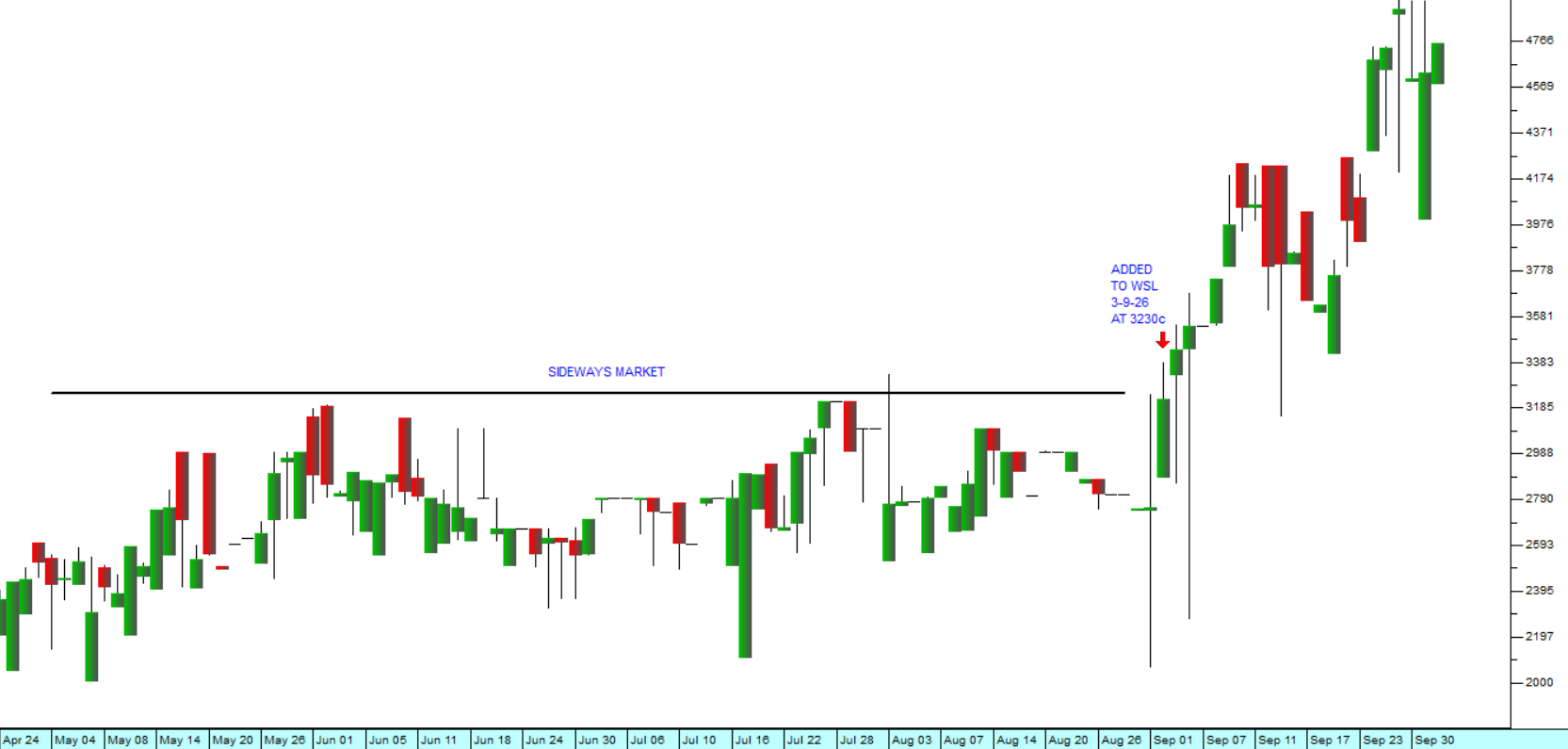
We became interested in this share when it broke up out of an extended sideways market and added it to the Winning Shares List (WSL) on 3rd September 2026 at a price of 3230c per share. It has subsequently risen to 4766c – a gain of 47,5% in just one month.
It is difficult to tell whether this rapid pace of advance will continue in the share but thus far its activities appear to be solid, and it seems to have considerable potential both in the US and outside. The share is sufficiently well traded for private investors with an average or R463 000 worth of shares changing hands each day.
STEFANUTTI
This is one of the few construction companies that has survived the ANC’s administration and especially the years when Jacob Zuma was president. It has recently benefitted from a positive settlement from Eskom for its work on the Kusile power plant and been able to reduce its outstanding debt levels substantially.
In its results for the year to 28th February 2026 it reported revenue up 2% and headline earnings per share (HEPS) from continuing operations up 202%. These results have impacted the share’s performance very positively. Consider the chart:
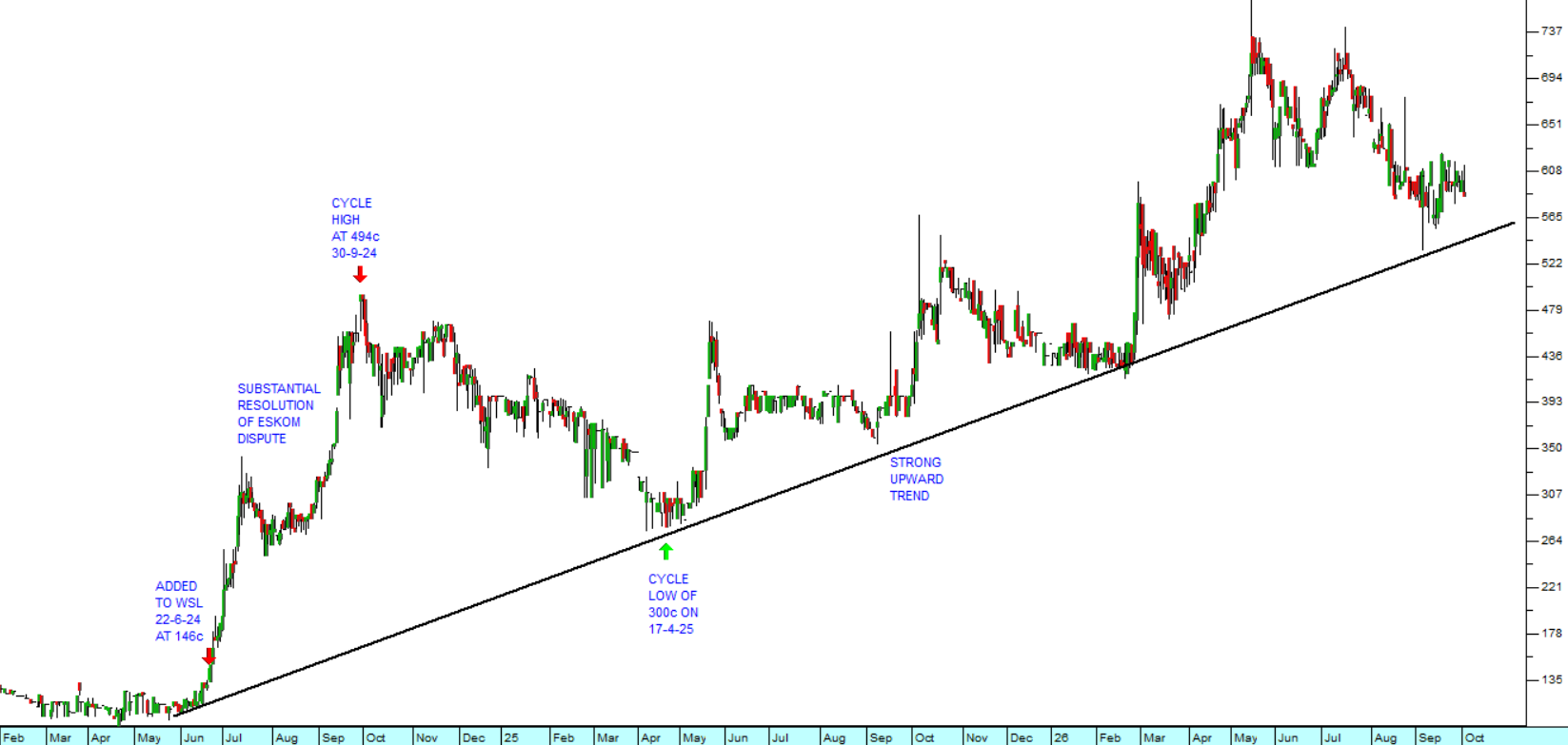
We first added Stefanutti to the Winning Shares List back in June of 2024 at a price of 146c. Our main reason for adding it was that it broke up out of a protracted sideways market and entered a new upward trend. Just over three months later the share reached a cycle high of 494c before entering a correction. We decided to stick with the share despite it going down to a cycle low of 300c in April 2025. Since then the share has again risen strongly to its current level of 585c. For those who bought into the share when we added it to the WSL at 146c this amounts to a gain of over 300% - or 131,6% per annum. We regard the current correction as a buying opportunity and expect the share to continue to perform well going forward.
← Back to Reports