The Confidential Report - November 2026
America
The mid-term elections in America and events connected with them have been dominating markets throughout the world. Iran and the Houthis, cognisant of the effect on Trump and the Republicans have taken the opportunity to attack gulf shipping and supply routes further, causing the price of oil to spike up again. A few days before the elections the oil price has once again surged with North Sea Brent back above $113. This is a direct result of Iranian and Houthi actions. The war in the Middle East, which Trump said would be over in a few weeks, has escalated and broadened. The Saudi retaliation against the Houthis is gaining momentum, and Syria is contemplating giving them assistance. The 100m barrels of reserve oil released by European Union countries had almost no impact on the price. Hurricane Isaias in the Gulf of Mexico temporarily threatened US production and caused about 25% of production to be stopped. The rising oil price has been very bad news for the Republicans and Trump who are blamed for the war in Iran and the consequent fuel price hikes. Petrol is well above $4 per gallon and diesel is once again approaching $6,50 a gallon.
Trump’s approval ratings are at an all-time low and he has been forced to campaign in what were previously considered by Republicans to be safe states. It is now apparent that the Democrats will certainly win the House of Representatives and that they now have a good chance (about 70%) of winning control of the Senate as well. Early voting is running at record levels which is generally good for the Democrats. States like Texas, Kansa and Iowa and others, which were previously strong Republican states, are now in question. The Democrats need to flip 4 seats to gain control of the Senate, and it appears that they have a very good chance of doing that. This will leave Trump as a lame duck president and significantly reduce his powers, especially to wage war. Consider the chart:
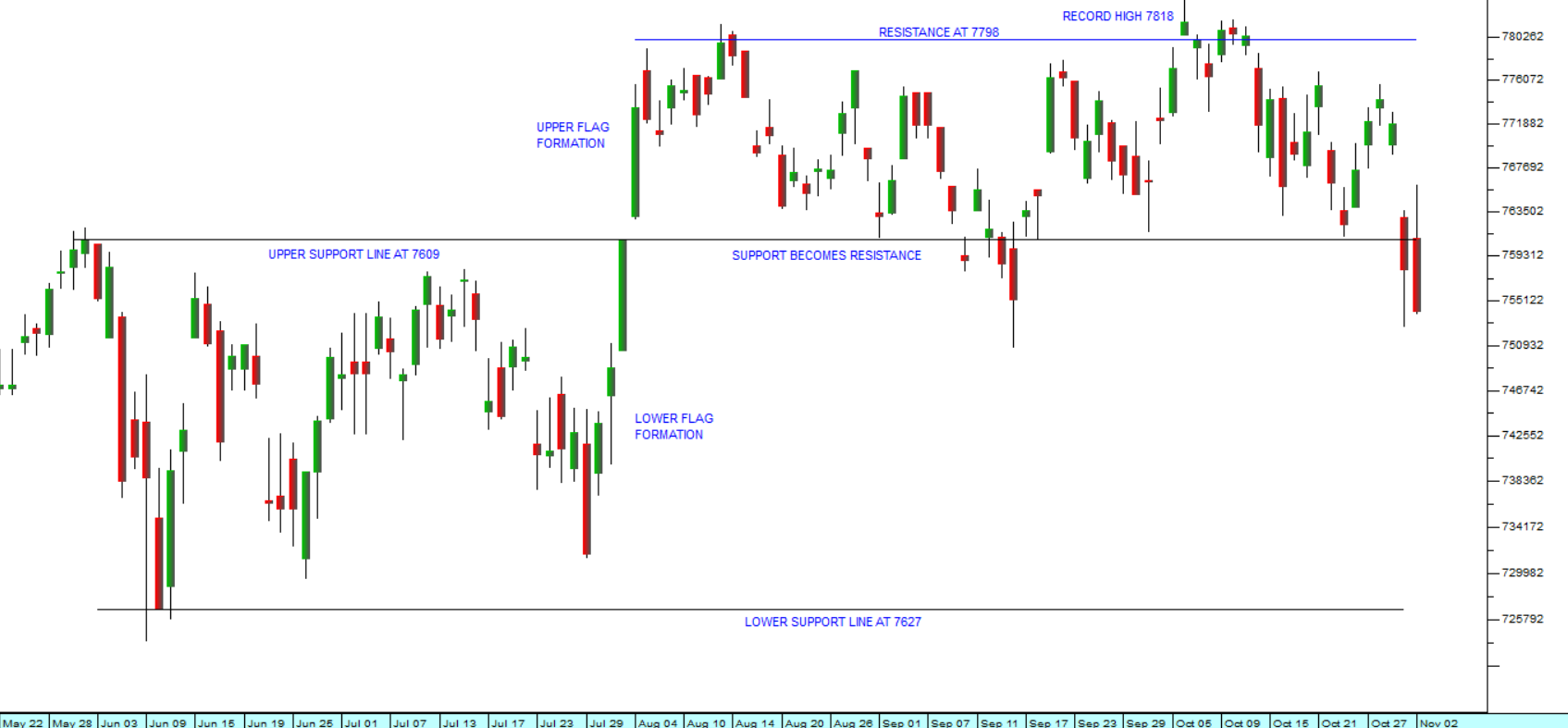
We have drawn your attention to this chart on a number of previous occasions. It shows the two flag formations which have trapped the S&P500 in rising sideways markets for the last six months. The upper flag formation has been broken on the downside twice since it began in August – on 15th September 2026 and again on Friday last week. On both occasions the break was almost certainly due to the fact that the price of North Sea Brent oil went up sharply.
Last week the Iranians and Houthis managed to attack more vessels in the Strait of Hormuz and the Persian Gulf - and threatened more attacks on the Saudi pipeline which made investors very nervous about the future supply of oil from the Middle East. The price of Brent has risen from about $72 on 3rd July 2026 to as high as $115 a few days ago despite Trump’s desperate attempts to keep it down. Consider the chart:
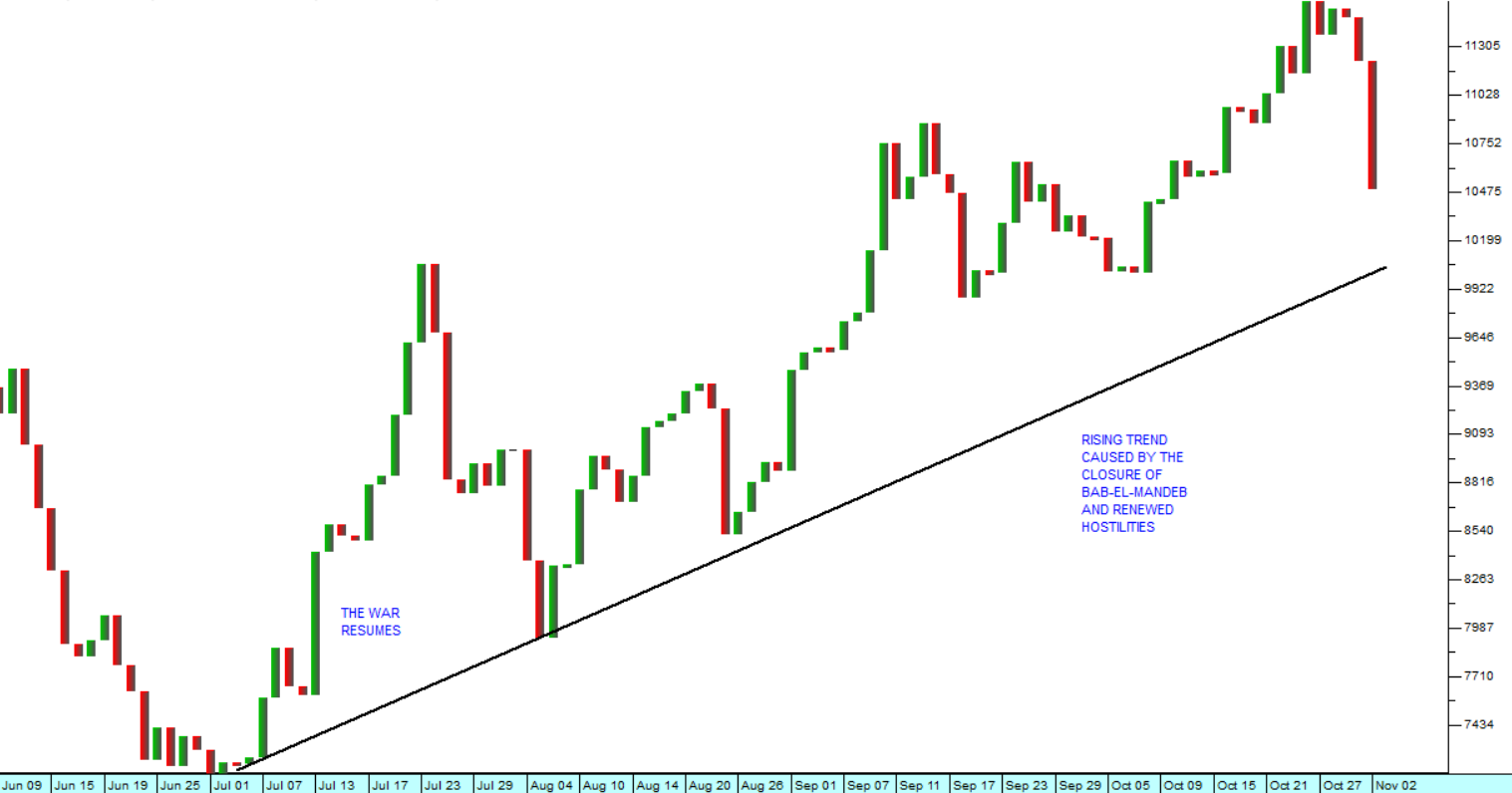
In our view, this was done deliberately to maintain the price of petrol and diesel at high levels in America in the lead up to and on the day of the mid-term elections. The tactic is proving very effective and there is little or nothing that Trump and the Republicans can do about it.
US inflation for the year to the end of September 2026 came in at 3,7%, above analysts’ expectations causing share prices to fall. Core inflation, excluding food and fuel, was 2,6%. Prices in September month were up 0,6% over August. Obviously, a major component of that was the continued high price of oil. The monetary policy committee (MPC) held interest rates unchanged in a 10-2 decision but there can be little doubt that they have become more hawkish. We expect that, given the rise in energy prices, core inflation could rise to 3% on second round effects in 2027. The figures are doing nothing to help Trump and the Republicans in the mid-term elections, and they are having an impact on investors as they contemplate the justification for the huge amounts of cash being directed towards expansion of artificial intelligence (AI). There is definite concern that high tech shares may not be able to achieve the returns which their current prices are discounting. The battle between AI and the rising cost of living in America, especially fuel prices, has been playing out in the S&P500 causing it to move sideways and capping its ability to make new all-time record highs.
The fact that the MPC has missed its target of 2% for core inflation for the last five years is significant. By holding rates unchanged they have entrenched the idea that they are more dovish than they probably should be. Kevin Warsh, the new Federal Reserve Bank governor, has been at pains to say that there is no political interference in the MPC’s policy stance – but the decision not to raise rates in the face of persistently high and rising inflation seems to contradict that. The MPC meets again in early December for the last time this year. We expect that if fuel prices remain high, they will be forced to raise interest rates at that point.
The climb in the oil price is not the only worry which investors had last week. The other was the huge cash burn of high tech companies and their apparent inability to perform. The quarterly results from Intel and Amazon were underwhelming. Intel shares fell as much as 30% on the day. This dragged down other chip makers and even Nvidia was down 4%. Analysts are now predicting that earnings will be up by 31% compared to last year’s September quarter. So far, 300 companies in the S&P 500 have reported and 82% of those have beaten consensus expectations. So, the performance of Amazon and Intel are being swamped by the overall good results. There can be little doubt that AI infrastructure spending is still producing strong commercial demand. Microsoft reported adjusted earnings of $4.89 per share and revenue of $92.28 billion in the quarter. Revenue was up 19% year over year.
The enduring problem with artificial intelligence (AI) and its impact on world markets is that like many technology-driven booms in the past AI is attracting far more capital than it really needs or is justified. In effect it is creating a “bubble” which will eventually burst. This is similar to other bubbles, like the 1920s bubble which came about as a result of the impact of the telephone and the motor vehicle on corporate profits. Investors, excited by the potential of these technologies over-invested and drove prices to record highs which eventually resulted in the 1929 crash. More recently the development of the internet caused the dot-com bubble and subsequent crash in 1998. Right now, companies on Wall Street are being drawn into listing because that is the best way for them to take advantage of the high prices that investors are prepared to pay for AI-related shares. Anthropic, Open AI and SpaceX together will have a larger market capitalisation than all post-World War II initial public offers (IPO) combined. Much of the capital invested is funded by credit and much of it will probably ultimately turn out be wasted. So even though AI is a very sound technology, at some point this bubble will almost certainly burst and the markets of the world will come down to more realistic levels. Then only real question, of course, is, When?
Anthropic’s Jack Clark addressing the IMF said recently that AI had the potential to increase America’s gross domestic product by as much as 30% by the year 2030. This prediction comes as the shares of CoreWeave, a specialised AI cloud provider, on Wall Street are collapsing. Coreweave is debt-driven and potentially over-extended. It has felt the brunt of the latest increase in fuel prices due to the Iran war, but it shows the potential for AI companies to become highly geared and to raise capital based on their “blue sky” potential rather than on actual profits. Oil prices pushed bond yields to record high levels and this has impacted the cost of Coreweave’s borrowings.
This market is very exciting at the moment and at the same time risky. Some Wall Street analysts are talking about a stealth bear market as many shares in the S&P500 are now more than 20% below their all-time highs. We believe that the current decline in the S&P has much to do with the spike in oil prices immediately prior to the US mid-term elections. It also seems probable to us that the Trump factor will diminish significantly after the dust settles from mid-term elections, but it will take time before the world economy returns to some semblance of normality. October month is now behind us, and normally at this time of year we can look forward to a Christmas rally – but, of course, the election may well make this time different. In the meantime, be sure to maintain a strict stop-loss strategy to protect yourself against systematic risk – that is your best defence if markets really are moving into a bear trend.
Ukraine
According to the Institute for the Study of War (ISW), since the beginning of September 2026, Ukraine has recaptured a net 241 square kilometres of territory. During September month Russia lost 46230 men killed, captured or missing and in October the figure is 49040 according to senior NATO officials. Putin has been unable to recapture the fortress belt before winter set in – in fact he has been losing ground with an immense and growing cost in men and material. Drone swarms have been the primary cause of these losses taking a heavy toll on advancing Russian troops. This pace of losses is simply unsustainable for the Russian army because Russia is estimated to be recruiting between 25000 and 30000 men each month. To overcome this shortfall, Russia is now recruiting in Africa in countries like Burundi, Zimbabwe and Sierra Lione. Recruits are attracted by substantial signing up bonuses and then find themselves on the frontline with almost no training. The simple mathematics of the situation indicate that Russia must soon either do a mass mobilisation within Russia or drastically reduce its military operations.
Trump, in his desperation to improve the Republican’s chances in the mid-term elections reduced Ukraine’s access to StarShield and reduced sanctions on Russia while striking a deal to import Russian diesel in the hopes of bringing the price of that precious commodity down before the elections. President Zelensky, after stopping attacks on Russian oil facilities from Sunday 11th October when Trump announced an energy ceasefire, and resumed attacks on Thursday 15th indicating that the Russians had not stopped bombing Ukrainian energy facilities. Reducing Ukraine’s access to StarShield did undoubtedly interfere with their ability to shoot down Russian drones coming into Ukrainian cities and thereby result in more civilian casualties. Trump’s hope that this might somehow bring the price of diesel down was always foolish and he is now trying to blame Elon Musk. The average price of diesel in America remains significantly above $6 per gallon making farming in the country areas where Trump’s support base comes from very expensive and raising inflationary pressures.
Ukraine has now destroyed 51% of Russia’s oil refining capacity. This is reported by the Ukrainian General Staff and Defence Ministry report recording deep strikes targeting key facilities in Moscow, Yaroslavl, Perm, Saratov, Syzran, and Ust-Luga. This has caused Russia to have internal shortages of petrol and diesel. Ukraine is busy destroying what is left. The effect has been to force Russia to import refined fuels as well as crippling its export revenue. This comes on top of the destruction of Wildberries warehouses and now data centres. These attacks when added to the recent success that Ukraine has had on the battlefield, especially around Lyman are making Putin far weaker both domestically and internationally.
Political
The latest IPSOS poll puts the ANC’s support at 30% nationally while the DA comes in with 28%. MK was at 12% while the EFF had 10%. Action SA and the IFP each had 4% and the PA had 2%. These figures show that the ANC has lost considerable ground even since the last presidential election while the DA has gained ground. Our expectations are more modest. We are expecting the ANC to get about 32% of the vote while the DA scores about 25%. Either way the polls show that the democracy in South Africa is more concerned about service delivery and honesty than they are about historical issues. The results are obviously a harbinger of things to come – importantly the next presidential elections due in August 2029. The DA’s power is increasing while the ANC is growing weaker. This trend will obviously shape the pace of economic reform throughout the country. In 2029, the DA may get to choose the next president – if they are the largest party in the country and in the government of national unity (GNU). That is obviously their unspoken objective.
The Constitutional Court’s decision to allow the ANC to register the 181 candidates for the election is a bit of luck for the party which is otherwise under pressure. We broadly agree with the decision because it avoids any suggestion that the elections are unfair and that voters do not have the opportunity to vote for the candidates that they may prefer. It also helps ensure the continued existence of the government of national unity (GNU) which has been instrumental in introducing a number of key economic reforms. It does, however, demonstrate the ANC’s on-going disorganisation and inability to run its own affairs efficiently – which casts doubt on its ability to govern the country as a whole.
Economy
In the medium-term budget policy statement (MTBPS) the Minister of Finance, Enoch Godongwana, kept the government on a conservative path towards fiscal consolidation and reduced government debt while at the same time offering some relief on fuel prices by cutting the price of diesel by R3 and the price of petrol by R1,50 in November. Gross domestic Product (GDP) is now only expected to grow by 1,2% this year compared to last year’s 1,6% and it is expected to grow by 1,6% next year. The deficit comes in slightly below the prediction in this year’s February budget at 78,4% of GDP which will make the ratings agencies happy. All-in-all it was a steady solid budget which confirmed the government’s commitment to fiscal discipline, and which was generally welcomed by business. Tax revenues benefited from the increased prices of commodities over the period resulting in R17bn of additional company tax collections above what was predicted in February. Notably, R10bn was allocated to meet the possible costs of the super el Nino weather event which may cause excessive heat and prolonged drought conditions. One of the benefits arising from the MTBPS is that the international ratings agencies may well decide to upgrade the South African economy one step closer to investment grade. Moodys, in particular, seems to be impressed with the government’s consistent approach to debt reduction and fiscal consolidation.
The rise in the cost of fuel to above R30 per litre is bound to have a big impact on the SA economy. Petrol prices have now risen more than 50% as a direct result of the war in Iran which began earlier this year, and diesel is up over 70%. This has obviously taken a big slice out of consumers and businesses incomes. The price of North Sea Brent oil has risen to $112 and the rand has weakened to R16.70 to the US dollar. The government is not really in a strong position to do much about these external blows because most of our fuel is imported. Bus and taxi fares will have to go up and that will impact the poorest people in the country disproportionately. Interest rates will also have to increase contain the inevitable secondary inflation effects. GDP growth will, likewise, be impacted and the economy could slip into a recession unless the oil price comes down.
The South African Reserve Bank’s leading index rose by 1,1% in August 2026 after falls of 0,8% in July and 1% in June. May was slightly positive with growth of 0,4%. Over the past year the index has gone up in 6 months and down in 6 months. The largest gain was in March when it rose by 2,2%. The index consists of the following elements: building plans approved, car sales, commodity prices, JSE share prices, job advertisements, manufacturing orders, real M1 money supply, hours worked per worker in manufacturing, the interest rate spread, the composite leading business cycle indicators of trading-partner countries, the business confidence index and the operating surplus. It is designed to give an indication of where the economy is likely to go. Altogether it is showing a mixed bag of results at the moment as the economy tries to absorb repeated fuel price shocks.
Inflation in the year to 30th September 2026 was given as 4,5% which compares with August’s figure of 4,4% and was considerably better than economists’ forecasts. The figure should enable the monetary policy committee (MPC) to avoid a further hike in interest rates when it meets on 19th November 2026 despite the increase in the price of fuel. We expect inflation to peak at somewhere around 5% later this year before beginning to fall back. Food inflation has been moderate which has helped keep the overall inflation rate down. There is evidence that consumers have moved to cheaper staple foods because of the higher cost of fuel. Obviously, inflation is now well above the Reserve Bank’s goal of 3%, but that is seen as a temporary phenomenon arising from the war in Iran which should be resolved in due course.
The producer price index (PPI) increased by 6,2% in the year to 30th September 2026, significantly up on August’s figure of 5%, mainly because of the sharp increase in the price of fuel. Over September month itself the PPI was up 1% with coke, petroleum, chemical, rubber, and plastic products grouping up by 19.1% year-on-year. Obviously, the rise in the PPI will feed through to the consumer price index (CPI) in due course reducing the purchasing power of the rand and impacting poorer households the most.
Payinc's Economic Index shows that economic activity in South Africa has grown by about 2% in the year ended on 30th September 2026. In September month itself economic activity declined by 0,4% which is a significant drop from August’s figure of 1,2% - and these figures do not take into account the sharp increase in fuel prices in October. In our view, the rising fuel prices may ultimately cause the South African economy to slip into a recession – which is defined as two successive quarters of negative GDP growth. It seems likely now that interest rates will have to go up further to keep inflation under control and that will put additional pressure on households and businesses. Payinc's Net Salary Index also shows that the average nominal net salary in September 2026 in South Africa was R21689 – 0,3% up from August 2026 and 1,8% higher than a year ago. If inflation is taken into account, then salaries declined in real terms by 2,6%. Obviously, the decline in real incomes is mostly a result of the war in Iran and the rising price of fuel somewhat off-set by the government’s decision to reduce the fuel levy until January 2027.
Mining production fell by 12,5% in August mainly because of a fall in the price of platinum group metals (PGM). PGM production was down by more than 22% in the month with coal and iron also down. Mining and manufacturing which together contributed about one fifth of gross domestic product (GDP) have been the worst affected by the rise in fuel prices as a result of the war in Iran. The latest jump in fuel prices at the beginning of October when added to earlier increases took the price of petrol to R30 per litre curtailing employment levels and business investment. These costs will feed through to inflation when the second-round effects begin to be felt. Despite this, in our view, there are two major benefits arising from the higher cost of fuel. They are:
- Higher fuel costs have probably caused Trump to become a lame duck President after the US November mid-term elections, and
- They are causing a rapid shift towards renewable energy as more and more people switch to electric vehicles and solar power thereby reducing the medium to long term impact of fossil fuels on climate change.
Stats SA reported that factory output fell by more than 4% in the year to 31st August 2026, mainly as a result of the surge in fuel prices due to the Iran war. Just in the month of August 2026 itself production was down 3%. A key component of manufacturing expenses is the price of diesel, which was up more than R3,20 a litre at the beginning of October 2026. Obviously, the reduced production will impact directly on employment numbers in the coming months and will also result in more companies going bankrupt. The South Africa economy is now really taking strain with the latest round of fuel price increases. In our view, this will have a direct result on the coming elections in November and add to the ANC’s relative unpopularity. The AA has called upon the Minister of Finance to completely scrap the road accident fund levy to reduce the load on consumers.
The spectre of the super el Nino weather phenomenon is now hanging over South African agriculture with farmers trying to prepare for a period of protracted drought. Dam levels are between 90% and 98% full at the moment which puts us in a good position and the recent rains have helped boost ground water. Farmers are expecting the drought to begin in January next year and to impact on second crops of maize and wheat. Luckily, South Africa has just had two very good rainy seasons for these staples and is well-positioned to get through an extended drought period. The farmers also have to contend with the higher cost of diesel which will certainly push food prices up in due course.
The tourism sector is a major employer in the economy and was impacted by the lower number of people coming to South Africa in September 2026. There were 16,9% less people visiting the country in September than in August 2026 according to Stats SA. The sharp drop in the number of visitors is probably due to the fact that airline tickets have risen sharply as have other forms of transport. The figures will impact the Western Cape Province particularly because of its large tourism sector. These conditions are likely to remain in place until the war in Iran is over, and fuel prices fall back to where they were before the war began.
South Africa had 123 insolvencies in September 2026 – but so far for the year insolvencies are down by 15% compared to last year. Of course, the September figures do not show the impact of the latest petrol price increase for October which was substantial. In November fuel prices are actually expected to drop at this stage due to the government’s intervention. The level of insolvencies also reflects the fact that the monetary policy committee (MPC) raised interest rates recently by 25 basis points. Overall, we believe that South Africa is “weathering the storm” quite well with inflation remaining under control and business conditions remaining practical. There have been many smaller companies that have gone out of business that are not included in these figures, however.
The latest World Economic Outlook report notes that the world economy has faced a number of significant threats over the past seven years including the COVID-19 pandemic, the wars in Ukraine and now Iran and higher commodity prices arising from these events. It still predicts that the world economy will grow by 3,1% this year and 3,7% next, but points to the growing reliance of economic growth on AI. The American economy is described as an economy balanced on “one support” – the potential growth coming through from the massive investment in AI. If that falls through the economy could contract sharply and no longer be able to service its $40 trillion government debt. We agree with this concern but are of the view that AI is unlikely to disappoint, especially now that the effects are being felt more widely in the economy.
The failure of Black Economic Empowerment policies over the past two decades to significantly impact on black businesses supports the DA’s contention that these policies are a significant drag on the economy. BEE is a major source of disagreement between the DA and ANC within the government of national unity (GNU) and it has become a major election issue. In our view, BEE has helped millions of people avoid poverty since the ANC introduced it and it has undoubtedly created a large black middle class, but together with the ANC’s cadre deployment policy it has also caused loss of important skills, especially in the state owned enterprises (SOE) and in many government departments.
South Africa’s treatment of sewage is in a disastrous state according to a report in the Business Day. Less than 10% of our sewage treatment systems are operating well and most are in a parlous state. Nearly half are seen as being critical – and this often results in raw sewage flowing into the country’s rivers which places the quality of tap water in doubt. Almost all of the 850 wastewater treatment systems are under municipal control – so the problem is part of the on-going crisis in municipal management. Obviously, the correct management of the sewage system is necessary to prevent the spread of disease especially in South Africa’s many informal settlements. Potable drinking water is a right guaranteed by the constitution in section 27 (1) (b).
The scrap metal industry in South Africa is most visible in the form of thousands of bin-pickers hauling their massively loaded home-made trolleys on our streets to the nearest merchant. They get paid in cash for what they can scrounge out of waste sites and bins. One of the problems with this is that they are often tempted to steal metal and cables from functioning infrastructure systems some of which can fetch them high prices from scrap merchants. The damage to infrastructure resulting from this is estimated to cost the country as much as R40bn per annum. There is now an effort to force scrap metal dealers to keep the personal details of the people who supply them with scrap to provide the police with a way to follow up on illegal vandalism. Transnet has been particularly hard-hit by theft of its infrastructure leading to it closing various lines making exports more expensive and difficult.
The sale of illegal cigarettes now accounts for about three quarters of all cigarettes sold in South Africa and has caused the closure of British American Tobacco’s local factory. The trade is carried out by crime syndicates who operate completely without fear of the authorities and are estimated to cost SARS around R30bn per annum. The police have proved to be completely incapable of stopping the trade and many of them are said to be benefitting from it. There are now fears that it will infect other parts of the economy. Already it is estimated that the illegal economy in this country is running at between 10% and 20% of gross domestic product (GDP).
The Rand
This chart of the rand/US dollar exchange rate is one that you should be familiar with by now. It shows the progress of the rand against the dollar since the beginning of this year, including its cyclical strongest point at R15.79 at the end of January:
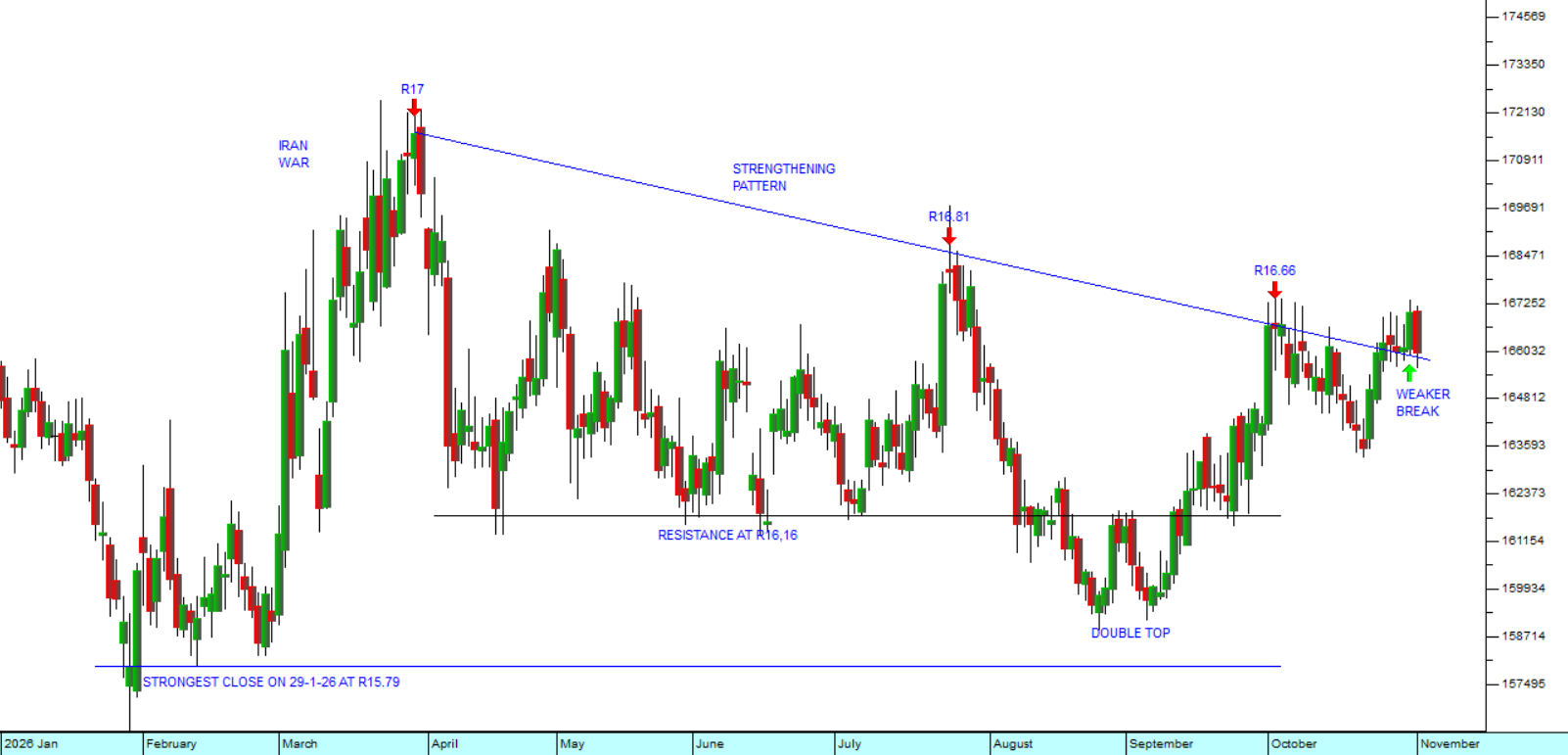
As you can see, The impact of the Iran war in March was initially to cause the rand (together with most other emerging market currencies) to weaken sharply, culminating in a level of R17 to the US dollar at the end of March. What followed has been a volatile period during which the rand has basically been strengthening – at least until the last weeks upward spike in the oil price. That caused the rand to break lower to R16.70 on Friday, cutting through its longer-term strengthening trend.
We do see this as a temporary impact of the US elections and Iran’s efforts to keep the price of oil high at least until they are decided. Iran’s strategy has been to cause Trump and the Republicans to lose control of the US House and Senate and it looks like they will be successful in that endeavour. After the elections we can probably expect to see oil fall back to more reasonable levels as efforts are made to get Trump impeached and the war against Iran stopped. This should also then have the effect of allowing the rand to strengthen again.
Bitcoin
The price of Bitcoin and other cryptocurrencies continues to map the decline in Trump’s influence, interrupted by his war in the Middle East and culminating in its disastrous impact on mid-term US elections. Consider the chart:
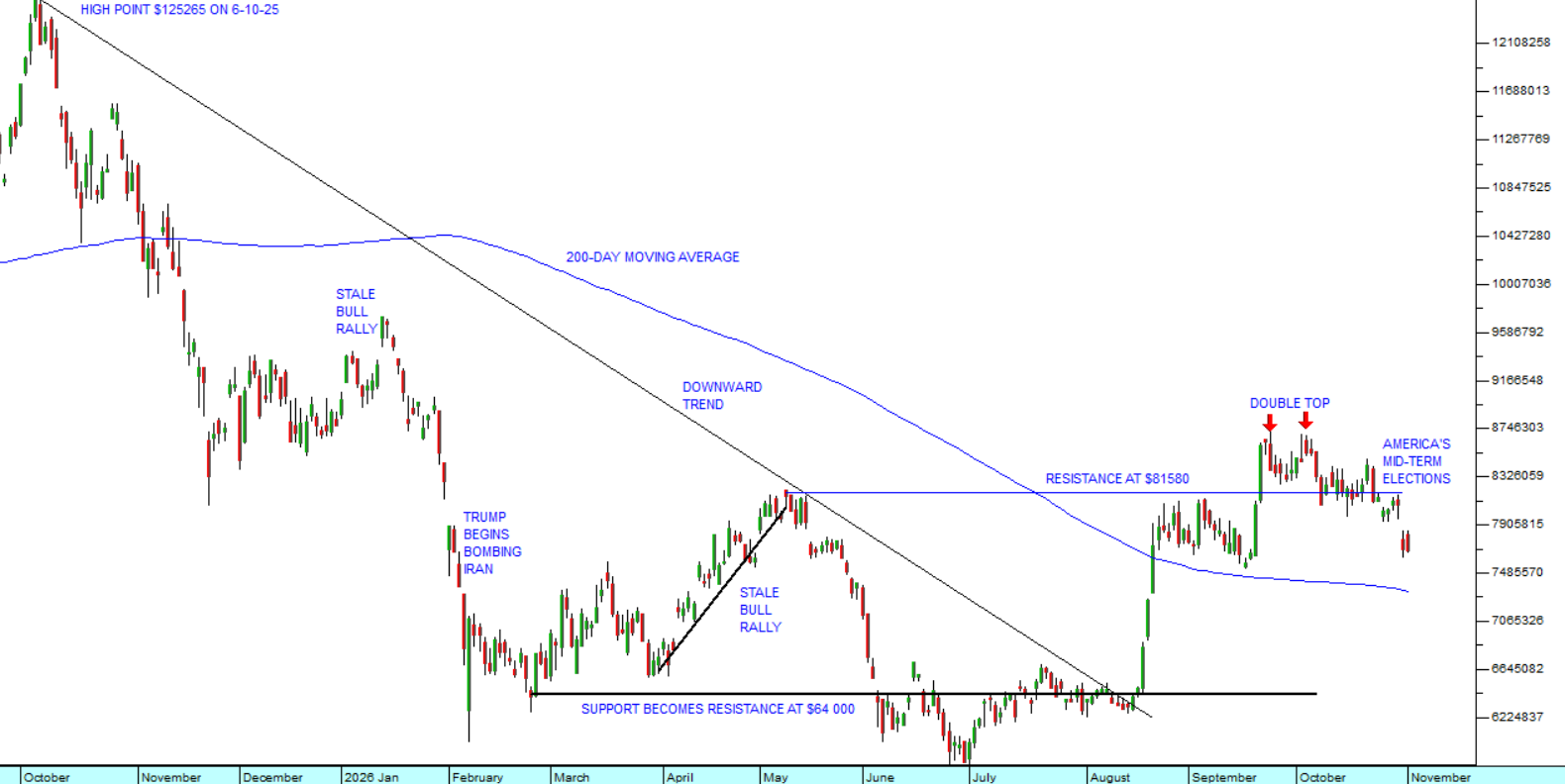
The chart shows Bitcoin’s all-time high on 6th October 2025 and its slump down to a low of $64000 in February 2026. Then, at the start of the Iran war it rallies, but never regains its former glory moving through a series of cycles culminating in the double top in mid-September and early October 2026.
If you subscribe to the view that the price of Bitcoin is linked to Trump’s influence, then Bitcoin’s sharp fall on Friday shows the growing realisation that he and the Republicans will come out of the mid-term elections with a vastly diminished power and influence. The probability of his impeachment and that of several others of his key supporters has now significantly increased.
We expect Bitcoin to continue reflecting the decline in Trump’s power and influence. Our advice remains what it always was: If you have them, sell them. If you don’t have them, don’t buy them.
Gold
The gold price fell back to $3882 on Friday last week, mainly because the effective rate of interest on US long bonds was up to 5,3% making them more attractive than gold – which, of course, pays no return at all. Perhaps there was another issue which investors were also watching – the fact that the two major wars in the world in Ukraine and Iran might be close to their ends.
In the last two months it has become increasingly clear that Russia cannot sustain the rate of losses that it incurring either in terms of men lost or financially. At the same time the protagonists of the Iran war – Trump and Netanyahu are both probably at or close to the end of their political lives due to significant loss of support from their respective democracies. It is not inconceivable that both of these wars could be resolved relatively soon by new administrations resulting in a sharp drop in international risk.
Indeed, if you look at the long-term pattern of the gold price in rands going back to 1990, you will see that there is a definite pattern. Every major international crisis results in international investors running for cover by buying gold – resulting in a spike upwards in the price. And then when the crisis is substantially over, the price falls back to more reasonable levels. Consider the chart:
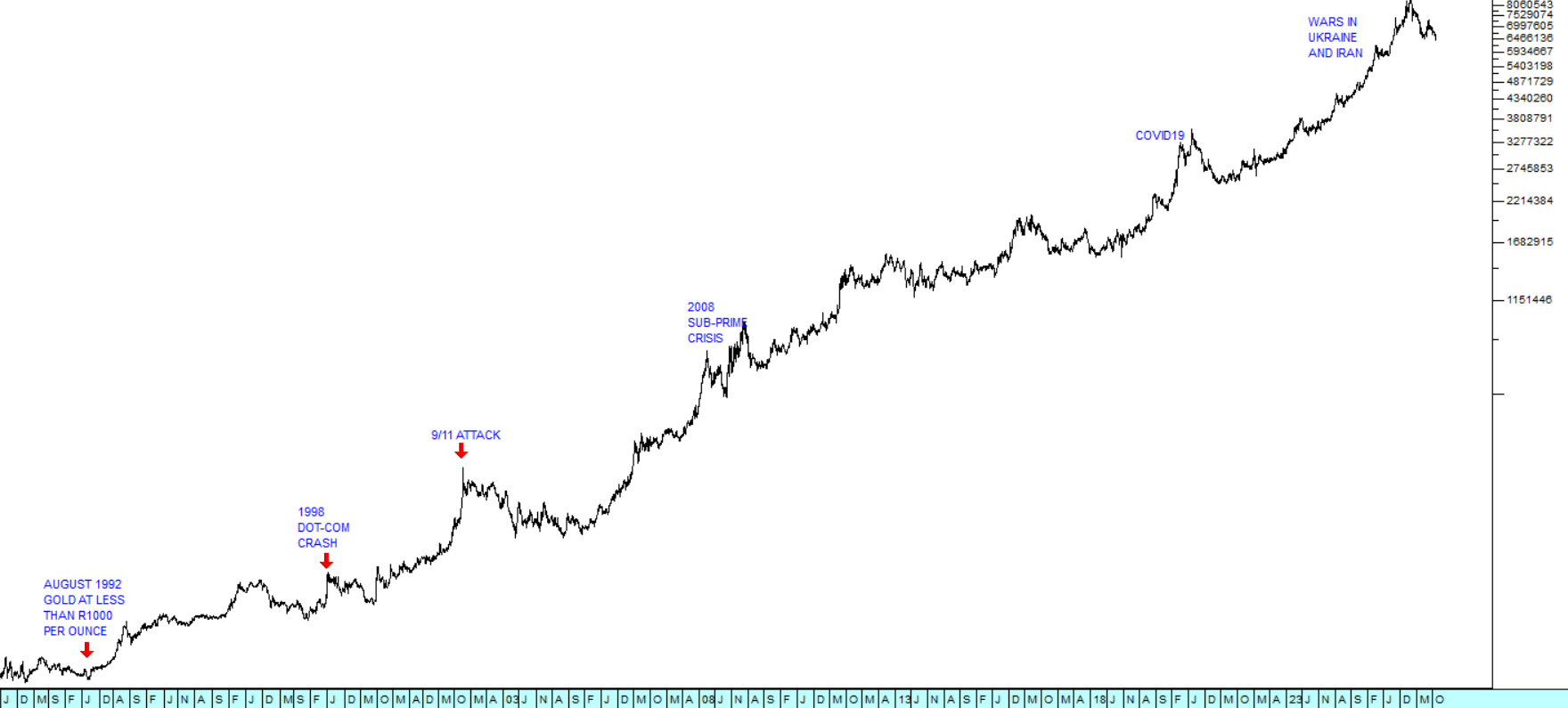
The chart shows that gold was below R1000 per ounce in 1992 – but that the trend was steadily upwards. There was a spike during the 1998 dot-com crash which saw many internet companies go into liquidation or lose 90% of their market capitalisation. When the crisis was over gold fell back. This also happened in 2001 following the 9/11 attacks on the World Trade Centre in New York, then again in 2008 with the sub-prime crisis, in 2020 with the COVID-19 pandemic and finally in 2025 and 2026 with the wars in Ukraine and Iran.
Now the gold has fallen back into a trough, following what investors clearly see as a significant decline in the risk on the world political stage. What is virtually certain, however, is that gold in rands will resume its long-term upward trend and remain the most secure asset on the planet.
Companies
OUTSURANCE
OUTsurance is what is left of Rand Merchant Insurance after it unbundled Momentum and Discovery and sold off its 30% stake in Hastings. It is now an insurance company which focuses on term and whole life insurance policies, providing pure death, disability, and critical illness cover with no investment or savings component. In its results for the year to 30th June 2026 the company reported headline earnings per share (HEPS) of 368,5c up 23.5%. We first became interested in OUTsurance in the middle of 2024 when it broke up out of an extended sideways pattern. Consider the chart:
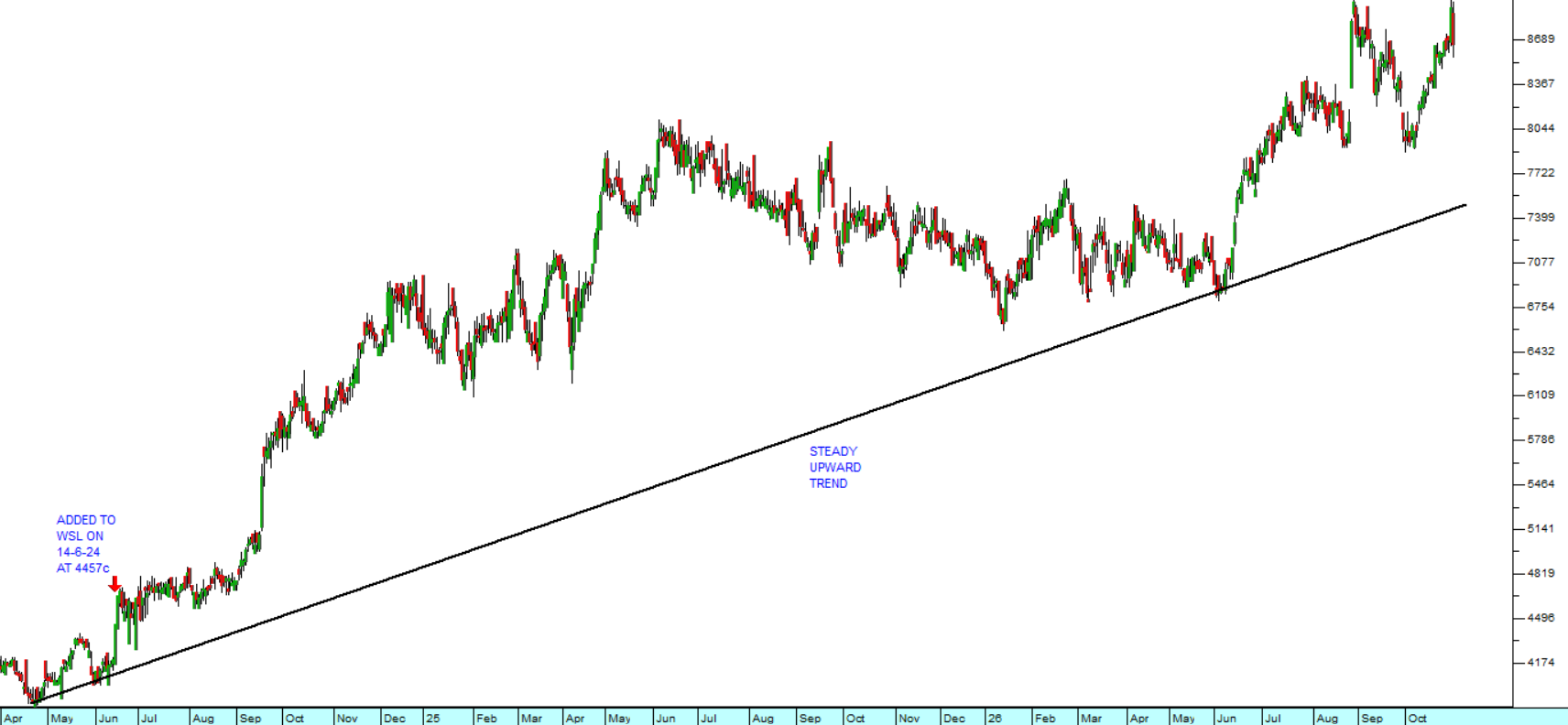
The company has businesses in South Africa, Australia and Ireland with 4,3 million policies and 8000 employees. It is an institutional share with a solid growth track record. Its performance is not the most exciting, but it is a reliable and relatively safe counter to have in your portfolio. We added it to the Winning Shares List (WSL) on 14th June 2024 at a price of 4457c. It has subsequently risen to 8663c – a gain of 94% in just over two years. We believe that it will continue to perform consistently in the coming years.
SHOPRITE
Shoprite has become a very impressive operation that is growing both organically and by acquisition. In its results for the 52 weeks to the 28th June 2026 the company reported merchandise sales up 7,2%, but what was impressive is that this was done with selling price inflation of just 0,8% - which makes it highly competitive on price with other supermarkets, given that South Africa’s food and non-alcoholic beverages inflation was almost 4% over the same period. Sixty/60 increased sales by 34,5% in the period showing that it too is taking market share and becoming a major part of South Africa’s retail shopping experience. Its outlets in the rest of Africa have gone through a period of consolidation, but in the period to 28th June 2026 they increased sales by 11% with improved profitability. Clearly Shoprite is learning to sell profitably in the rest of Africa which may have great significance for the future. Diluted headline earnings per share (HEPS) were up 12,2% which is a very strong performance and reflects both growth and good cost control. The share price has been performing well. Consider the chart:
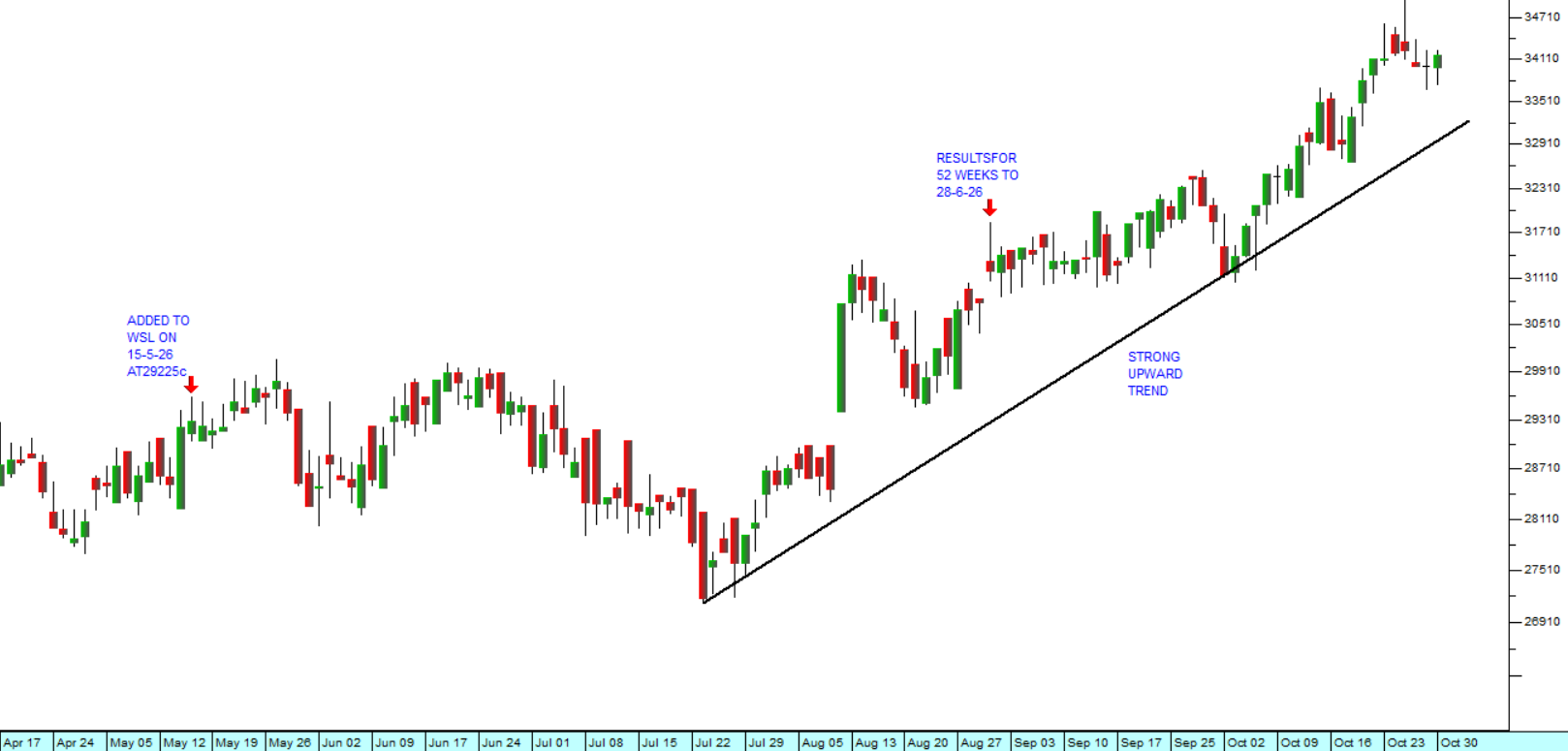
As you can see here in the last four months, the share price has really taken off. We added Shoprite to the Winning Shares List (WSL) on 15th May 2026 in anticipation of good results and we were not disappointed. Since then, the share has appreciated 17% in under six months and we look forward to further gains as institutional fund managers begin to understand the potential of this counter.
ADVTECH
On 20th August 2026, Advtech published its results for the six months to 30th June 2026. In those results they reported revenue up 8% and headline earnings per share (HEPS) up 16%. This is a company that is growing steadily and benefiting from the general decline in the education offered by the government in the country. It is also opening and growing campuses in other parts of Africa. Its new Emeris brand consolidates Varsity College, Vega, MSA and HSM and it is taking on student accommodation with a 500-bed residence being built in Durban.
It is traditional in the education sector for people to pay in advance – which means that a company like Advtech does not have a significant working capital problem. It does have a debtors book, but it is rarely at risk of not being paid for education actually provided. Many of its students arrange to pay monthly which provides the company with a strong cash flow. In general, people will prioritise the payment of their children’s school fees, even during a recession. In our view this share will continue to appreciate steadily in the years to come.
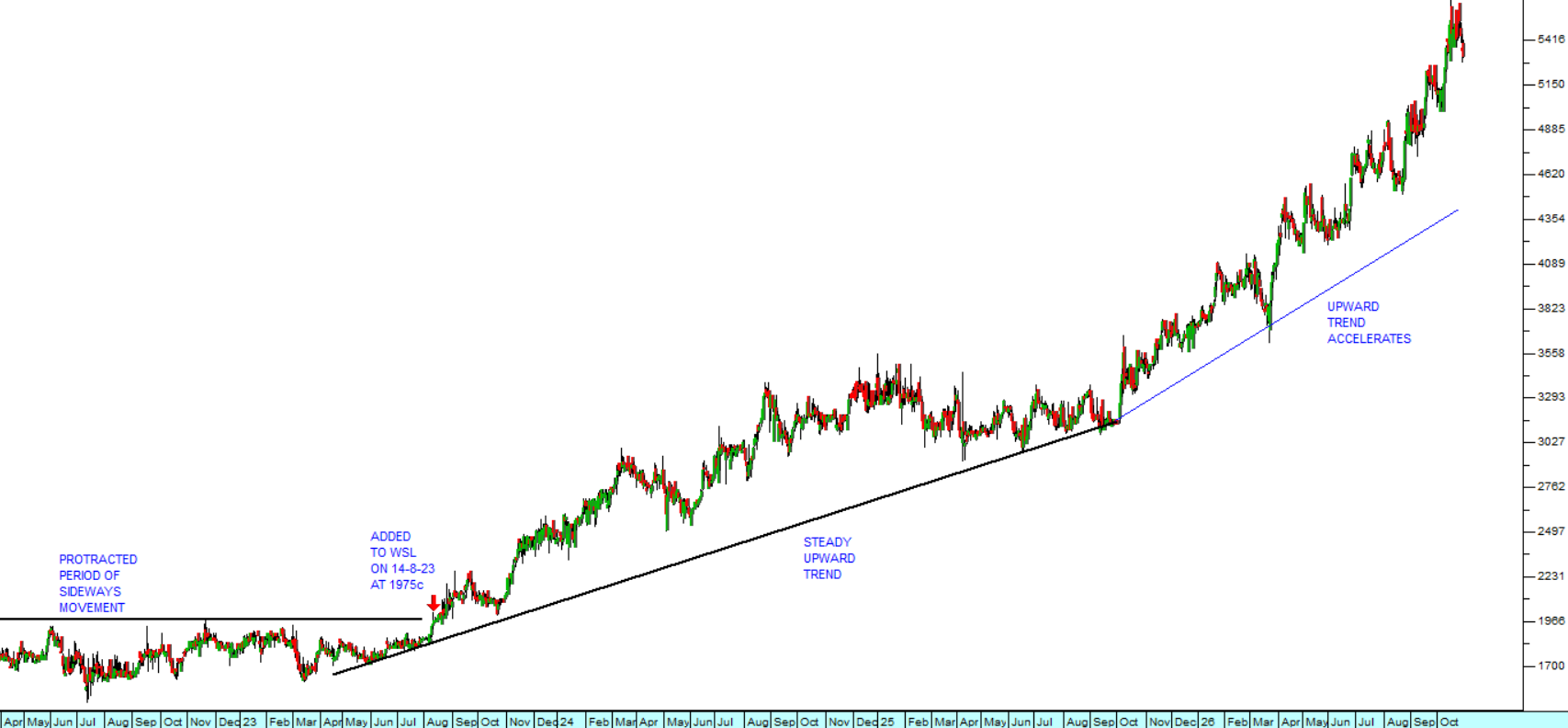
We first became interested in this share when it broke up out of its sideways market in August 2023. We added it to the Winning Shares List (WSL) of 14th August 2023 at a price of 1975c. Since then it has risen to a peak of 5540c on 27th October 2026 before falling back on profit taking. Over the 3 years and 2 months that it has been on the WSL has appreciated almost 170% and paid out 306c in dividends. This makes it an excellent long-term low-risk investment. Consider the chart:
PSG FIN
In its results for the six months to 31st August 2026, PSG Financial Services reported recurring headline earnings per share (HEPS) up 5% and assets under management (AUM) up 15%. The company’s gross written premiums increased by 5% as well leading to a return on equity (ROE) of 26,5%. This is a quality share which offers steady long-term growth and an annual dividend that has grown every year for the past ten years. The share price growth reflects this steady performance. Consider the chart:
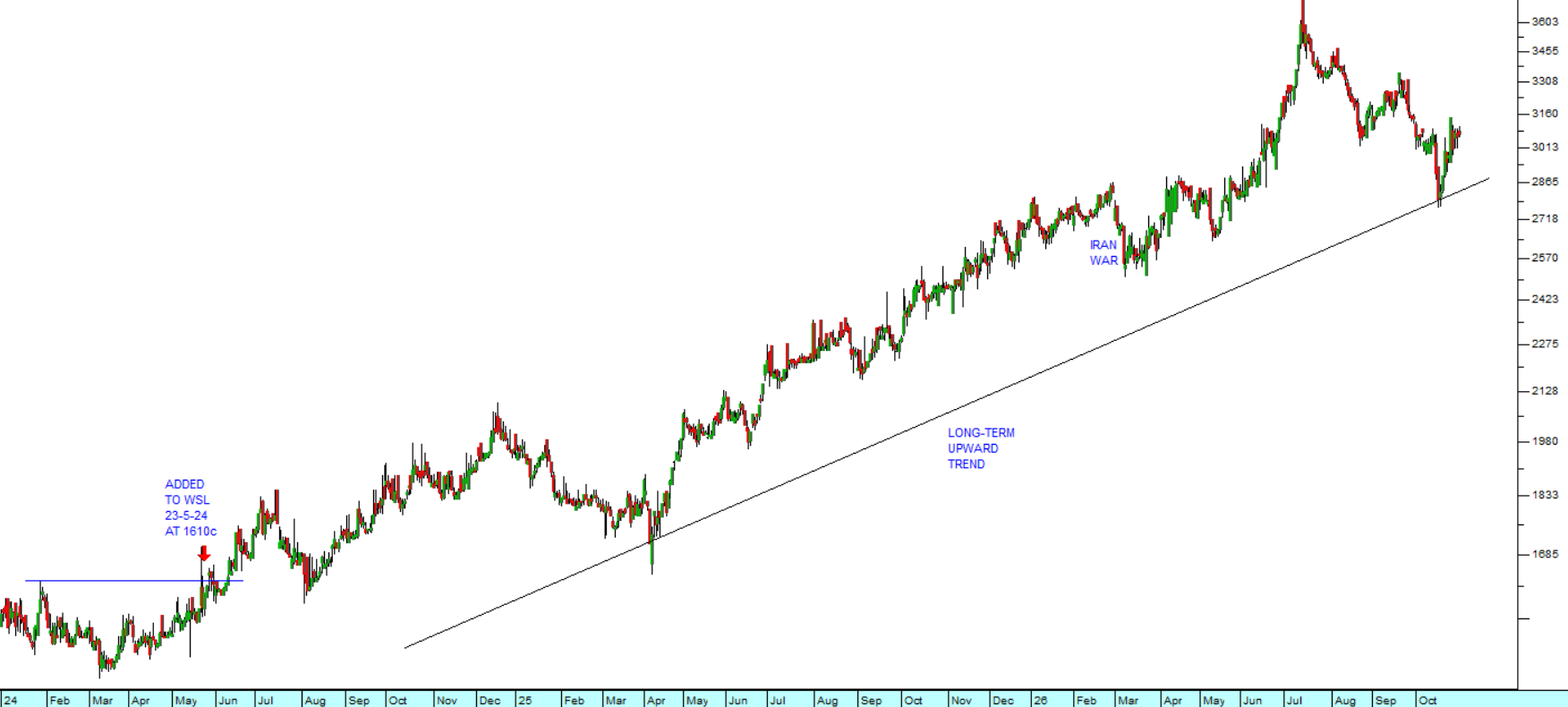
We became interested in this share in May 2024 when it broke above a double top into a new upward trend. We added it to the Winning Shares List (WSL) on 23rd May 2024 at a price of 1610c. It has subsequently moved up to a peak of 3600c on 13th July 2026 before falling back into a correction. We believe that it remains a solid investment and that the current downward trend offers a good buying opportunity.
ASPEN
Last year Aspen was burdened with excessive debt and had the problem of managing overseas businesses in Australia, New Zealand and Asia. At the end of December the company announced that it had struck a cash deal to sell these overseas businesses for the equivalent of R26,47 billion. The deal enabled the company to pay of much of its debt and consolidate its balance sheet at the same time relieving management of the problem of taking care of an overseas business. When the deal was made the share jumped up and that attracted out attention because prior to that it had been falling consistently. Consider the chart:
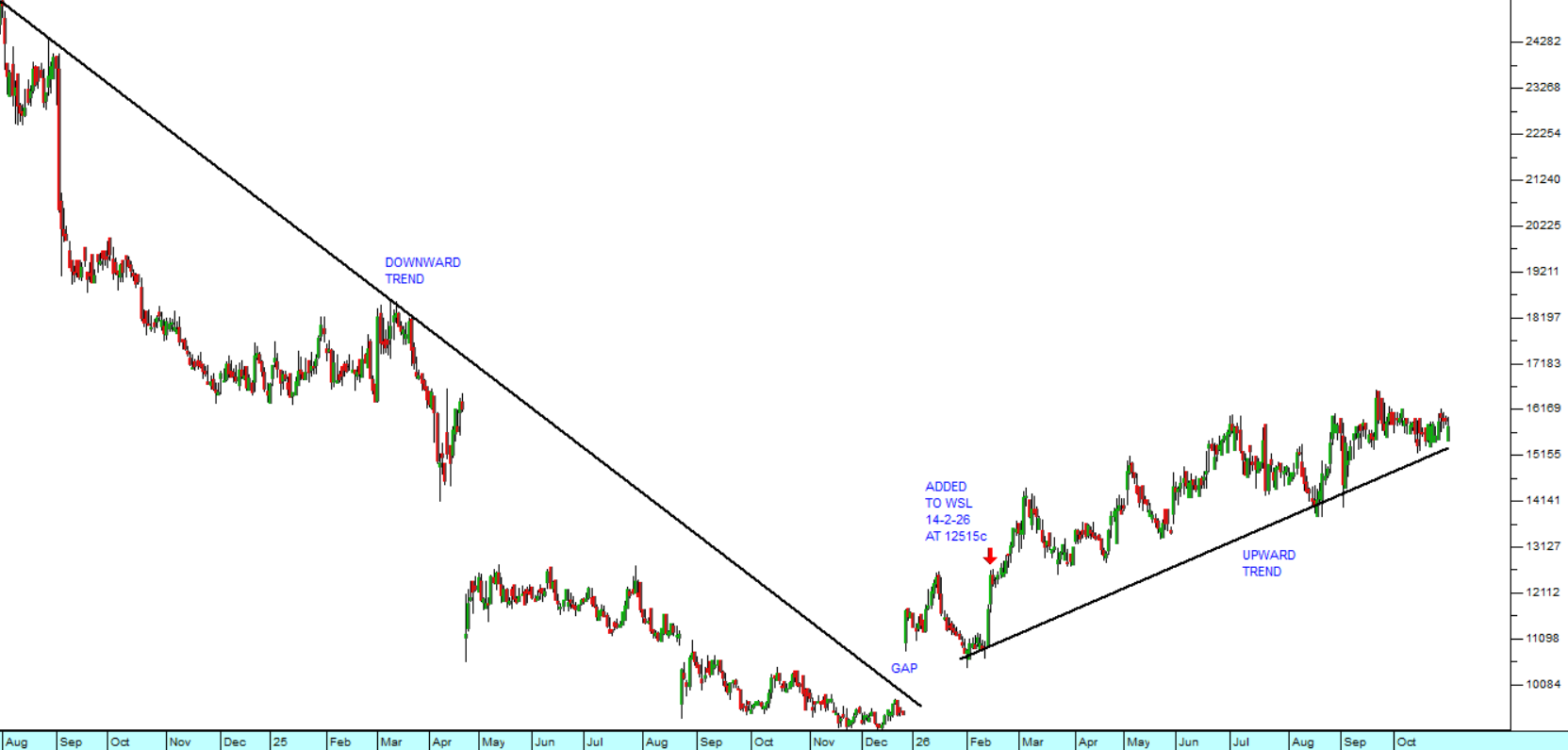
Aspen's business is in the manufacture and marketing of a wide variety of branded pharmaceuticals – which is an exceptionally profitable business. Without the incubus of the Australian and related operations, the company has been free to grow steadily and the share price has been in a steady upward trend.
We added Aspen to the Winning Shares List (WSL) on 14th February 2026 at a price of 12515c and it has now moved up to 15800c – a gain of 26% in just over 9 months. We believe that it has a strong business model and should continue to perform well.
DISCLAIMER
All information and data contained within the PDSnet Articles, Confidential Reports, Glossary Terms, and Opinions are provided for informational purposes only. PDSnet makes no representations or warranties regarding the accuracy, completeness, suitability, reliability, or validity of any information provided and shall not be held liable for any errors, omissions, or losses, injuries, or damages arising from its publication, display, or use. The information contained within the PDSnet Articles, Confidential Reports, Glossary Terms, and Opinions is based on the authors’ opinions, research, knowledge, and experience and should not be construed as professional financial or investment advice. Any ideas, recommendations, analyses, or strategies presented should not be acted upon without first carefully assessing your personal and financial circumstances or consulting a qualified financial professional. Views, assessments, and opinions may change from time to time as new information becomes available, without prior notice. PDSnet reserves the right to amend, withdraw, or delete any article, report, glossary entry, comment, or opinion at its sole discretion and without prior notice. Confidentiality: Any material specifically designated as confidential is intended solely for authorised recipients and may not be reproduced, distributed, disclosed, or shared with third parties without prior written permission from PDSnet.
← Back to Reports